Objective: To determine whether unobtrusive long-term in-home assessment of walking speed and its variability can distinguish those with mild cognitive impairment (MCI) from those with intact cognition.
Methods: Walking speed was assessed using passive infrared sensors fixed in series on the ceiling of the homes of elderly individuals participating in the Intelligent Systems for Assessing Aging Change (ISAAC) cohort study. Latent trajectory models were used to analyze weekly mean speed and walking speed variability (coefficient of variation [COV]).
Results: ISAAC participants living alone included 54 participants with intact cognition, 31 participants with nonamnestic MCI (naMCI), and 8 participants with amnestic MCI at baseline, with a mean follow-up of 2.6 ± 1.0 years. Trajectory models identified 3 distinct trajectories (fast, moderate, and slow) of mean weekly walking speed. Participants with naMCI were more likely to be in the slow speed group than in the fast (p = 0.01) or moderate (p = 0.04) speed groups. For COV, 4 distinct trajectories were identified: group 1, the highest baseline and increasing COV followed by a sharply declining COV; groups 2 and 3, relatively stable COV; and group 4, the lowest baseline and decreasing COV. Participants with naMCI were more likely to be members of either highest or lowest baseline COV groups (groups 1 or 4), possibly representing the trajectory of walking speed variability for early- and late-stage MCI, respectively.
Conclusion: Walking speed and its daily variability may be an early marker of the development of MCI. These and other real-time measures of function may offer novel ways of detecting transition phases leading to dementia.
I was re-reading Hillfit last night. It is hard to come back to something that you wrote a few months before - I keep thinking of ways it could be improved or things that could be expressed better. I am going to revise it over the next few weeks and maybe also send all those that have bought it a few free bonus chapters and FAQs, but one area in particular that I thought was not expressed well was the idea of the sequential recruitment of muscle fibres / motor units and how the "size principle" leads to the way in which I recommend that you train.
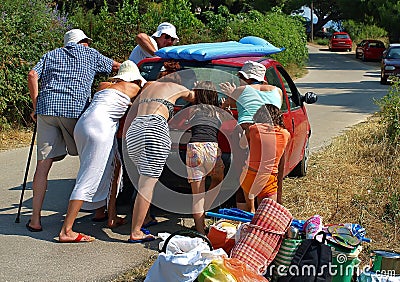
Imagine that you find that your car battery is flat. You need to push start the car. Luckily your friends are there to help. They are a strange group though - all athletic but with different skills, different aptitudes. There are lots of them too; whole families of them in fact.
The SLOW clan are there: a large family, numerous lean and stringy fellas; not particularly powerful but in sports at school they had the reputation of being able to keep going for a long time before getting exhausted; and when they did get tired, they soon recovered. They were the family that dominated cross country running, and the 5000m on the track. There are lots of them too...it is a big family.
The INTERMEDIATE brothers are around as well: there are fewer of them than the SLOW clan, but they are more powerful. More thickset, athletic guys. They excel at soccer, sprinting, and played on the wings in the rugby team. They don't last as long as the SLOW guys and they take longer to get back on their feet when they do get exhausted but they have a fair bit more power.
....and then there were the FAST twins : only the two of them.....but they are a huge pair, muscles hanging off them: solid, strong and powerful. They are strongmen - competing in powerlifting - but have no stamina. At school they were the props in rubgy. Walking round the pitch going from big effort to big effort. After their big exertions they take a long time to recover...but they are certainly powerful.
Start to push that car.
You jump in the car, ready to turn the key and get the engine going. Strangely you have parked at the bottom of a hill. You need some help. First on the scene are the SLOW brothers. There are loads of them and they crowd around the car to start pushing.
Gradually the car begins to inch out of its space and move, but it is hard work pushing up that hill. The SLOW clan have been working hard but they have their limits and one by one they get exhausted, dropping away as the others keep pushing.
Sequential Recruitment......
You are still not going fast enough to start the car though, so you shout out to the passing INTERMEDIATE brothers who jump in and join in with the pushing. But it is a tough hill and while you are moving more quickly it is still not fast enough. Now the INTERMEDIATE brothers are getting tired and they too drop out.
You still need that push though - you are not going fast enough yet - so as INTERMEDIATEs drop out finally you call over the FAST twins, who just happened to be stood near by.
They bring their bulk and power; while the crowds of SLOW and INTERMEDIATE have dropped away, the FAST PAIR keep pushing. Not for long though - they have pushed hard but do not last and are soon spent. It is OK though. At last you have enough speed and you manage to turn the engine.
In your mirror your survey a trail of bodies up the road: SLOW, INTERMEDIATE and FAST are all exhausted...and as athletes they are all grateful for the training effect that pushing your car will have had. They will ALL get fitter because of this effort
Recovery
Most of the SLOW guys are just about recovered now and look like they could do the same all over again. The INTERMEDIATE brothers are starting to get back to normal too and look almost ready to go. The FAST twins though are puffing away at the kerb - it will take some time before they are ready to go again.
But if it was a smaller car?
What if it was a smaller car, like your sister's mini? Could you have exhausted all of that crowd? Well the next day you find out. There was a frost, damp in the distributor and her mini will not start. Luckily the same bunch is around and again the SLOW clan crowd around the mini and start pushing.
The car is a lot lighter and the SLOW brothers keep pushing it along. Some of them tire and drop out, but the car is moving quite fast and they soon recover and join in the push again. The car keeps moving and gets faster. Not all the SLOW brothers are pushing at the same time - there are enough of them to keep pushing even while some of them drop out for a breather, recover and then join in again.
Soon the mini starts and you are off. SLOW were able to get her going, recycling the tired brothers into the push. She never needed to call on INTERMEDIATE, let alone the FAST twins. They do not get any work at all!
A heavier car?
It is a bad week for weather and the next day it is not your car, not the light mini or you sister, but a great big SUV that your neighbour has bought. Time for another push. Once more everyone gathers around the car. All of the SLOW clan pushes.....but nothing happens! The INTERMEDIATE brothers join in, all pushing in tandem. But once more there is no movement. It needs more power. The FAST twins come over. Finally with all pushing in tandem the car starts to move; but the FAST pair soon get tired. As soon as they drop out of the push the car stops....the SLOW and INTERMEDIATE were still pushing, not tired, but not strong enough to work to exhaustion.
So lets apply that to exercise!
In an exercise your aim is to exhaust all of the motor units: SLOW, INTERMEDIATE and FAST. As John Little says:
Retaining in our mind’s eye the purpose of exercise is to recruit and stimulate as many muscle fibers (in all categories – slow twitch, intermediate twitch and fast twitch) as possible, and that for this to occur, a muscle or group of muscles must be given a load sufficient (but not excessive) enough to initiate a sequential recruitment of fibers, and also given a time frame that permits such fibers to be recruited, the question becomes:
I'll always be skinny this isn't bad
The aim is to progress through all 3 motor unit types quickly enough to recruit them all.....but not so quickly that only the fast twitch fibres get the bulk of the stimulation......and not so slowly that the slow / intermediate twitch units can recover and recycle back into the effort, so the fast ones are never called on.
So you do not want steady state easy cardio - that only hits the slow twitch units. Even when some get tired they recover and come back into play and you never tap into the intermediate or fast units.
And you do not want a really heavy weight where you fail immediately or after one or two reps. Then you need to call on all of the units - slow, intermediate and fast - to fire in tandem to shift it and as soon as the fast units are exhausted you are finished without really working the others.
You need the "goldilocks" load - enough to involve the slow units .... and then as they drop out to call in the intermediate ones and then as they fall off the fast ones come in until they are exhausted.
For example the Wall Sit!
Of course you do not actually have to move. It is the contraction that it important....even if that is a static contraction. Lets get back to the wall sit, one of the key moves in HillfitI say to hold it for between 60 and 90 seconds.
You get into position and get tight. Your quads are contracting hard to hold you there. Initially your slow twitch motor units are firing. Gradually they run ou of fuel and cannot fire anymore. They can't rest and recover though because you need to keep in that position and to do that you need more units to fire.
So the intermediate units start to work. Finally they all drop out too - there was not as many of them and they tire faster.
Ultimately you need the fast twitch fibres to get to work. There are not many of them and they are powerful but they tire fast. When they are done, you fall to the floor - all of the motor units are exhausted, milked of glycogen, empty of fuel. All sorts of signals are given metabolically and mechanically to get you growing, so that you are prepared for such an exertion in the future - your body does not like to be incapacitated and vulnerable like that so it will get stronger to protect itself.
That took maybe 90 seconds....but you worked all the units. Next time you might need to hold some dumbbells and you might fail in 60 seconds. If you fail in less than that you've gone too heavy - it is like pushing the SUV, the fast twitch units are needed from the start and soon drop out.
Does that make sense?
Let me know in the comments. I am just trying to explain a key idea in a way that people will understand.
Which of the three things in the title is the most important?
I run a health blog, so you don't need to be a rocket scientist to guess my opinion. Health. As I mentioned in "The Diet Debacle" debacle, you are what you eat i.e. if you eat/drink rubbish, you get a rubbish body. Therefore, what people eat/drink is important in order to maximise their health.
Should "food" manufacturers (whose prime objective is to maximise their profits) have the right to unduly influence people's food choices (which results in them experiencing deteriorating health) by using cunning marketing methods? I say "No".
Should "food" manufacturers have the right to unduly influence politicians into subsidising the raw ingredients of their "food" by bribery lobbying? I say "No".
It's been argued that "food" manufacturers should have the right to free speech. I disagree, as the motives of a "food" manufacturer are completely different from the motives of an individual.
I'm not arguing for a ban on the marketing of non-food items or stopping government subsidies for non-food items. Am I really asking so much?
The above are moot points, as "food" manufacturers and governments are very powerful, and nobody wants to give up power. Therefore, nothing much will change unless you people out there can persuade other people to do what you are doing by leading by example, and so on. If enough people stop buying "food" (and I'm using quotes deliberately, as a lot of "food" isn't fit for pig-swill, let alone human consumption) and start buying, cooking & eating real food, some "food" manufacturers might experience such a large drop in profits that they go out of business.
1) The comment: I'm just about to leave the following comment on Peter (Hyperlipid)'s blog post Insulin and the Rewards of overfeeding. I thought that it was so good at summing-up, I'll post it here first!
"All,
Insulin increases the amount of glucose & FFAs entering fat cells, muscle cells & the liver.
Insulin decreases the amount of glycerol & FFAs exiting fat cells & the amount of glucose exiting the liver.
Hyperinsulinaemia (which can produce sedation) results when one or more of the following tissues loses insulin sensitivity:- fat cells, muscle cells & the liver.
So, why do people keep saying that hyperinsulinaemia locks nutrients away in fat cells only, thus robbing other cells of nutrients, thus causing lethargy?
The relative insulin sensitivity of tissues determines the relative partitioning of nutrients into those tissues.
When tissues lose sensitivity to insulin, blood glucose control becomes impaired. This results in a roller-coaster blood glucose level after eating high-glycaemic carbohydrates. A rapidly-falling blood glucose level can cause ravenous hunger. I have experienced this during medically-monitored tests (OGTTs & an insulin shock test).
Low-carb/ketogenic diets don't result in a roller-coaster blood glucose level and therefore don't cause ravenous hunger. Simples!
Over-eating due to ravenous hunger is NOT gluttony, just as under-moving due to sedation is NOT sloth.
EDIT: This didn't go in my comment but should have:- "Low-carb/ketogenic diets result in the avoidance of moreish & calorific foods such as sweets, chocolate, cake, biscuits, pizza, Pringles etc. A single bite of such foods has a negligible effect on blood glucose & insulin levels, but encourages another bite and another and another ad nauseam due to Food Reward.
2) The simile: I use similes. I used the simile "As happy as a pig in shit" in a comment somewhere on Woos blog. Now, you may (or may not) have noticed that my user-name is Nigeepoo. We Brits are obsessed by two things - The weather and our bowel movements. I find things to do with poo and farting amusing (schoolboy humour, I know!). I used the simile "As happy as a pig in shit" because it is amusing to me.
"Re: the comment...Sorry, not convinced. You are basically refusing to admit your choice of words implied moral judgement. The phrase "happier than a pig in shit" is always applied to examples of people being content in immorality/bad behavior particularly gluttony and sloth... unless it is used ironically. Only an autistic or a non-english speaker would believe this crap."
Woo, you are as mad as a March hare. IMO of course, like everything I write. Duh!
I commented on that last post explaining why I chose the Wall Sit as a key exercise in Hillfit Here is what I said:
I chose the Wall Sit / Air Bench / Wall Sit for Hillfit for a number of reasons.
First of all it is simple to learn. Too many trainers or internet personalities present exercises that may be fine but are actually complex motor skills. Kettlebell snatches and swings for example may or may not be good exercises but they are not easy to learn without decent coaching and a lot of practice. The Wall sit is different – it is a very simple move. Once in position your task is simple – hold that position until you can’t hold it anymore, sequentially recruiting the muscle fibres.
Secondly it is a congruent exercise (in terms of Bill DeSimone’s work). At the 90 degree knee position you are at maximum moment arm for the quads, while this is also the position of maximum muscle torque – the hardest position in terms of leverage is met with the muscle being at its strongest.
Thirdly it removes much risk. Whatever the squat defenders say you are in a risky position moving with a bar on your back. I’ve seen and experienced too many slips and accidents. I’ve seen people squat without collars only to see plates slide off the bar so it flips off and cracks them in the back of the head. I’ve seen people get stuck at the bottom. In terms of duty of care I cannot recommend this move to the average person that I aimed the book at. With the Wall Sit there can be zero added load or if you do add load you can do it safely – hold dumbbells at your side or in a goblet position.
In terms of performance I either just do the timed hold, adding weight if I go over 90 seconds, or do that and immediately go into the top half of a free /air squat, the easy portion where the moment arm is less and you can keep going. I also sometimes do them Max Pyramid style: 20seconds with knees at about 60 degrees, 20 seconds with knees at 90 degrees, then 90 degrees with added weight for 20s, add weight until you can’t hold for 20 then back down, usually backing to zero load and then the 60 degrees.
Wall sits were the basic quad exercise Bill DeSimone recommended in his first book, Moment Arm Exercise which was what got me thinking of them as the basic move.
For me for most people a wall sit, plus a plank (pushup position) would be the start of all training. I also add some timed static contractions now, but that is another story.
All that research seemed to focus on endurance exercise but it was interesting to see Alex point to new research that indicates that there are similar ideas at play with respect to lifting weights.
What I thought was neat about the study was the distinction between "peripheral" and "central" fatigue: the former is the reduced ability of your muscle itself to contract, and the latter is a reduction in the signal from your brain to your muscle demanding contraction. If you pick up a heavy (above critical torque) dumbbell and lift it until you can't anymore, the limiting factor appears to be peripheral fatigue. Your muscles are simply no longer capable of contracting powerfully enough to lift the weight. In contrast, if you lift a lighter (below critical torque) dumbbell to failure, your muscles themselves fatigue to a much lesser extent, suggesting that fatigue somewhere in your brain or central nervous system is the problem.