There has been some interest in the papers about the amazing quads of the German cyclist Robert Forstemann
There is a blog here that has pulled together a few more photos and videos of this guy.
Tom Platz eat your heart out....
Selasa, 31 Juli 2012
Activate! Your Dynamic Range of Motion - by Tom Furman
Tom Furman sent me a copy of his new ebook to review. He sells a few ebooks which are all very good value, well produced and extremely accessible. I've recommended his book 10 Exercises that will de-age your body by 10 years to lots of people who just need a very simple set of moves.
ACTIVATE - continues in that style. At only $10 it is superb value, well designed and illustrated with clear photographs and simple explanations of the various stretches and mobility drills. I am not really a fan of stretching as a warm up, but targeted stretching to promote and preserve appropriate flexibility- as Tom explains in the book - certainly has a role.
Definitely worth your $10 You can download a copy here.
I hope that Tom does't mind me taking a quote from the book, but this sums up his approach and interest:
I have great sympathy for this - what does the average person need in order to maintain health and function. Just keep things simple.
ACTIVATE - continues in that style. At only $10 it is superb value, well designed and illustrated with clear photographs and simple explanations of the various stretches and mobility drills. I am not really a fan of stretching as a warm up, but targeted stretching to promote and preserve appropriate flexibility- as Tom explains in the book - certainly has a role.
Definitely worth your $10 You can download a copy here.
I hope that Tom does't mind me taking a quote from the book, but this sums up his approach and interest:
what type of training should the person with no desire to compete, but who wants to improve both quality of life and longevity do? Is there some secret method, or is it common sense? I tend to go with common sense. There are no secrets, just truth yet to be uncovered.
I have great sympathy for this - what does the average person need in order to maintain health and function. Just keep things simple.
A reminder - old people need strength
It is a theme that I've had on here before - the importance of basic strength as people get older. Balance is sometimes promoted as key to preventing falls in the elderly but sometimes the issue is not balance but strength.
Here is a new study that highlights this principle:
Even something very basic and simple like the approach in Hillfit, could have a big impact on the function and safety of older people.
Here is a new study that highlights this principle:
(Full paper)
ObjectiveTo assess the effect of lower limb strength on falls and balance in community-dwelling elderly persons by a health status questionnaire, evaluation of lower limb strength and balance.
MethodA total of 86 subjects (age 69.8±5.3) were categorized into one of two groups, "Fallers" and "Non-fallers". Thirty one participants who had reported the experience of having fallen unexpectedly at least once in the past year were assigned into the group "Fallers", and the remaining 55 subjects having no fall history in the past year, "Non-fallers". A self-assessment questionnaire was taken. Lower limb strength was measured by a "Chair stand test". Balance was measured by the stability index of the fall risk test protocol of Balance System SD® (Biodex, New York, USA). The differences between the two groups were compared and the correlation between lower limb strength and balance were analyzed.
ResultsThe questionnaire demonstrated no significant differences between two groups. The "Chair stand test" showed a significantly less for the "Fallers" (p<0.05). The stability index was significantly greater in the "Fallers" group (p<0.05). There was a moderate negative correlation between the "Chair stand test" and the "Stability index" (R=-0.576, p<0.01).
ConclusionThis study suggests that the "Chair stand test" is a useful screening process for lower limb strength which correlates to risk for falls and balance in the elderly.
Even something very basic and simple like the approach in Hillfit, could have a big impact on the function and safety of older people.
Blame your Mother.....
Just wanted to point to a couple of interesting things I saw today. I have remarked previously on this blog that the cool topics seem at the moment to be:
- the microbiome - the bacteria that live in and on us and have a profound impact on our health
- epigenetics - your genes are not your destiny, they do not provide an absolute blueprint, but a set of options; it is the genes that are expressed / turned on that are important. Lots of things in your environment - even before birth - control this.
- mitochondria - the strange little symbiotic organelles / primitive cells that live within our cells and are central to generating energy, oxidising fuel.
Here are two stories that relate to a couple of these:
- Delivery by caesarean section and risk of obesity - now fatter women often end up having c sections so that may be one factor, but I've also seen discussion that one element may be that a vaginal birth exposes the baby to essentil bacteria, priming the immune system, setting the hormal system. Avoiding this set of bacteria avoids what is actually an essential stage of birth, a vital challenge, a good stress.
- Sick from stress? Blame your mom… and epigenetics - this study .....
If you're sick from stress, a new research report appearing in the August 2012 issue of The FASEB Journal (http://www.fasebj.org) suggests that what your mother ate—or didn't eat—may be part of the cause. The report shows that choline intake that is higher than what is generally recommended during pregnancy may improve how a child responds to stress. These improvements are the result of epigenetic changes that ultimately lead to lower cortisol levels. Epigenetic changes affect how a gene functions, even if the gene itself is not changed. Lowering cortisol is important as high levels of cortisol are linked to a wide range of problems ranging from mental health to metabolic and cardiovascular disorders.
This epigenetic thing is really interesting in the context of diet, training and fitness. We think about what we can do to alter our bodies and our fitness, but so much has already been done by our environment, particularly the womb that we were in.
Keep smiling
This is a fascinating one. It is all connected you know. Emotion, performance, appearance. Your posture and expression can be a window on your mental and physical state. It is not only that you feelings can affect your posture and your facial expression - you look dejected or unhappy - it seems that your expression can affect your feelings.....smiling makes things feel better.
This was reported today - Smiling Facilitates Stress Recovery
It makes me think of the work that Marcora has done looking at how facial expression impacts on fatigue in his psychobiological model of fatigue. His study here showed how the onset of frowning indicated the point at which things were starting to feel hard, but in discussions by email we chatted about the possibility that things could work the other way - smiling might make everything feel easier and ward off fatigue.
This was reported today - Smiling Facilitates Stress Recovery
The results of the study suggest that smiling may actually influence our physical state: compared to participants who held neutral facial expressions, participants who were instructed to smile, and in particular those with Duchenne (genuine) smiles, had lower heart rate levels after recovery from the stressful activities. The participants who held chopsticks in a manner that forced them to smile, but were not explicitly told to smile as part of the training, also reported a smaller decrease in positive affect compared to those who held neutral facial expressions.
These findings show that smiling during brief stressors can help to reduce the intensity of the body’s stress response, regardless of whether a person actually feels happy.
It makes me think of the work that Marcora has done looking at how facial expression impacts on fatigue in his psychobiological model of fatigue. His study here showed how the onset of frowning indicated the point at which things were starting to feel hard, but in discussions by email we chatted about the possibility that things could work the other way - smiling might make everything feel easier and ward off fatigue.
Senin, 30 Juli 2012
Another stunning jump
Reader Justin Martirano sent me this stunning jump video of him getting 51.5"
Wow! Let me know when you get the 9 Justin!
Long time reader, love your site. Saw your box jump post today and thought I'd forward my last high box jump. Next time I'll go for 9 plates.
Wow! Let me know when you get the 9 Justin!
Sabtu, 28 Juli 2012
Jump
I've not had a video of a big jump on here for a while. I used to post lots of them - there is something about a huge jump that I find very impressive - the power and explosiveness. I am sue there is technique here - getting those feet up - but strength is key too.
Jumat, 27 Juli 2012
Super Slow training puts muscle on old people
Well it is not exactly Superslow (TM) as RennEx would prescribe this is a moderately slow protocol - 3 second positive, 3 second negative. Also from the abstract it is difficult to be clear about what they did...but even so it is good to see this study. Old people need muscle and this is a clear way to put some beef on them. Twice a week that is all.
Can anyone get the full paper?
We investigated the effects of low-intensity resistance training on muscle size and strength in old men and women. Thirty five participants (59-76 years old) were randomly assigned into two groups and performed low-intensity (50% of one-repetition maximum) knee extension and flexion exercises with either slow movement and tonic force generation (LST; 3-s eccentric, 3-s concentric, and 1-s isometric actions with no rest between each repetition) or normal speed (LN; 1-s concentric and 1-s eccentric actions with 1-s rest between each repetition) twice a week for 12 weeks (2-week preparation and 10-week intervention). The LST significantly increased thigh muscle thickness as well as isometric knee extension and flexion strengths. The LN significantly improved the strength, but its hypertrophic effect was limited. These results indicate that even for older individuals, the LST can be an effective method for gaining muscle mass and strength.
The number of overweight has doubled in the world
A recent study showed that ten of the world a person is obese. Accordingly, in the last thirty years the number of obese people has doubled. This study done by the United States and Britain, and the results are published in the journal Lancet.
Imperial College and Harvard University researchers in London from 1980 to 2008 of the ( BMI ) body mass index, cholesterol and high blood pressure or high blood pressure studied. Researchers say that in many developed countries reduce high blood pressure and cholesterol levels, but obesity is increasing all over the world.
Obesity, high blood pressure and cholesterol can cause heart disease three. Statistics show that 9.8 percent of the world in 2008 and 13.8 percent of men and women were obese had a BMI ( Body Mass Index ) over 30. If you compare data from 1980, 4.8 per cent and 7.9 per cent of the women were obese.
Obesity in Pacific Island countries is highest in the world and the average BMI ( Body Mass Index ) is between 34 to 35.The South - East Asia and sub-Shariy African countries, more than 70 percent. But the rest of the world's income in relation to obesity and high-income countries, obesity has increased.
In most rich countries between 1980 and 2008 in the United States increased BMI ( Body Mass Index ). The women to men in the New Zealand and Australia is the number of obesity cases after the United States and Australia met in the UK. In some countries of Western Europe, people have managed to maintain their BMI ( Body Mass Index ) levels unchanged.
Belgium, Finland, France, Italy and Switzerland in the woman's BMI ( Body Mass Index ) did not increase. While Italy and Switzerland in the men's BMI ( Body Mass Index ) rose only marginally. In rich countries the increase in obesity and high blood pressure in many countries that has succeeded in reducing cholesterol.
In many countries the problem of high blood pressure has decreased. In the case of women in Australia and North America have high blood pressure and cholesterol reduction. While the world has decreased in cases of high blood pressure. European countries, the UK has the lowest reduction in blood pressure cases.
Eastern and Western African countries and the Baltic countries had the highest blood pressure levels. While Australia, North America, Europe and other Western countries have reduced cholesterol levels significantly. The East and South East Asia and Pacific region increased the amount of cholesterol in the blood.
Kamis, 26 Juli 2012
barefootin'
Barefoot running and minimal shoes must be getting popular when there are academic studies on how interested athletes are in the subject....
Creatine in your beer!
Ha. I know I've been posting a lot on creatine recently but this one that I saw today deserved a post....Scottish Punk Brewer Brew Dog have brought out a special beer for the Olympics, laced with creatine and other performance enhancers!
Read about it on their blog - Never Mind the Anabolics!
This is Never Mind the Anabolics. A 6.5% India Pale Ale infused with creatine, guarana, ginseng, gingo, maca powder, matcha tea and kola nut.
Why waste time training hard? This little beauty does the hard work for you. Guaranteed to boost your sporting ability in an almost completely legal way. Most of the performance enhancing additives we infused into this ale are banned for professional athletes. But winning by any possible means is the name of the game here.
You can get your paws on the beer here:
Rabu, 25 Juli 2012
The Health Delusion
Rannoch pointed to this blog. I've been reading it through and there is some great stuff on there. Check it out. The Health Delusion is the book and the blog is Health Uncut
A new review on creatine
Sticking to the subject of creatine....I spotted this new review, with the whole paper available.
All this has persuaded me to start experimenting with creatine again. 1 teaspoon / 5 g a day at the moment....
Creatine is one of the most popular and widely researched natural supplements. The majority of studies have focused on the effects of creatine monohydrate on performance and health; however, many other forms of creatine exist and are commercially available in the sports nutrition/supplement market. Regardless of the form, supplementation with creatine has regularly shown to increase strength, fat free mass, and muscle morphology with concurrent heavy resistance training more than resistance training alone. Creatine may be of benefit in other modes of exercise such as high-intensity sprints or endurance training. However, it appears that the effects of creatine diminish as the length of time spent exercising increases. Even though not all individuals respond similarly to creatine supplementation, it is generally accepted that its supplementation increases creatine storage and promotes a faster regeneration of adenosine triphosphate between high intensity exercises. These improved outcomes will increase performance and promote greater training adaptations. More recent research suggests that creatine supplementation in amounts of 0.1 g/kg of body weight combined with resistance training improves training adaptations at a cellular and sub-cellular level. Finally, although presently ingesting creatine as an oral supplement is considered safe and ethical, the perception of safety cannot be guaranteed, especially when administered for long period of time to different populations (athletes, sedentary, patient, active, young or elderly).
All this has persuaded me to start experimenting with creatine again. 1 teaspoon / 5 g a day at the moment....
Senin, 23 Juli 2012
Does a massage make you feel wiped out?
I've had that experience - a hard massage leaving me feeling a bit wiped out: tired, groggy. This is a fascinating post from Paul explaining his theory that in many cases this is caused by a mild case of rhabdo.....
Poisoned by Massage
Rather than being “detoxifying,” as many believe, massage probably causes a modestly toxic situation in the body
Sabtu, 21 Juli 2012
Morning Banana Diet
How about lose weight quickly and without going hungry and can eat anything? That's what promises Morning Banana Diet, which was created in Japan a few years ago and became the fever there and then also in the United States. The success in Japan was much that led to a shortage of bananas in the local supermarkets.
Proponents of the Banana Diet say that it is possible to lose weight 8 kgs in one month or up to 18 kgs in two months on this diet. This all with out restrictions on what you eat for lunch or dinner. But is the Banana Diet really work?
How Does the Banana Diet
The Banana Diet is very easy to follow, there are few rules and there is a specific menu, just a few rules. See also:
- At breakfast, eat 1-4 bananas accompanied by warm or at room temperature
- Do not eat anything until lunch time
- Lunch and dinner usually eat
- Afternoon Snack released
- The dinner should be made until 8 pm and after dinner, nothing else should be consumed until bedtime
- Sleep before midnight
But this diet work?
The banana is a fruit rich in fiber, both soluble and insoluble. The fiber in bananas prolong satiety, leading people to eat less naturally. The resistant starch, type of fibers which contains banana, when digested produces substances which can increase the capacity of the body fat burning and also decrease the accumulation of it in the body.
Banana Calories and Nutrients
A banana is far from being considered a high-calorie food, it can have between 60-180 calories depending on size. The banana gold is the calorie about 125 calories. Other bananas and silver as the dwarf contains about 90 calories.
Jumat, 20 Juli 2012
More on Creatine
The BBC Panorama programme last night has caused a bit of interest in its expose that many of the products pushed for sports be they sports drinks, fancy footwear or BCAAs are actually pretty useless and in fact in some cases - drinking too much for example - can cause harm - reported here.
The paper behind this was in the BMJ
What actually crept into the programme at the end amid all of the debunking was a quiet statement that there are only two products that have really been found to have much in the way of positive benefits: caffeine and creatine.
I have mentioned creatine a few times on here in the past. I've tried it on and off and have never felt good with it - I cramp up and feel "dry". I keep trying it again, although I've not had any for a couple of years.
Anyway, coincidentally I saw this abstract today of a review about Creatine, I've not read it yet, but the whole paper is available
The paper behind this was in the BMJ
What actually crept into the programme at the end amid all of the debunking was a quiet statement that there are only two products that have really been found to have much in the way of positive benefits: caffeine and creatine.
I have mentioned creatine a few times on here in the past. I've tried it on and off and have never felt good with it - I cramp up and feel "dry". I keep trying it again, although I've not had any for a couple of years.
Anyway, coincidentally I saw this abstract today of a review about Creatine, I've not read it yet, but the whole paper is available
Creatine is one of the most popular and widely researched natural supplements. The majority of studies have focused on the effects of creatine monohydrate on performance and health; however, many other forms of creatine exist and are commercially available in the sports nutrition/supplement market. Regardless of the form, supplementation with creatine has regularly shown to increase strength, fat free mass, and muscle morphology with concurrent heavy resistance training more than resistance training alone. Creatine may be of benefit in other modes of exercise such as high-intensity sprints or endurance training. However, it appears that the effects of creatine diminish as the length of time spent exercising increases. Even though not all individuals respond similarly to creatine supplementation, it is generally accepted that its supplementation increases creatine storage and promotes a faster regeneration of adenosine triphosphate between high intensity exercises. These improved outcomes will increase performance and promote greater training adaptations. More recent research suggests that creatine supplementation in amounts of 0.1 g/kg of body weight combined with resistance training improves training adaptations at a cellular and sub-cellular level. Finally, although presently ingesting creatine as an oral supplement is considered safe and ethical, the perception of safety cannot be guaranteed, especially when administered for long period of time to different populations (athletes, sedentary, patient, active, young or elderly).
Kamis, 19 Juli 2012
Diets to Lose Weight
How to Loss weight? To answer this question asked by more and more people, all the time there are new formulas for weight loss and diets for weight loss developed by specialists.
Diets to Loss Most Popular
Every moment brings new weight loss diets, regimes of famous and miraculous remedies that promise to make you Loss weight. Among the most popular diets are:
Diet of points: diet for weight loss is a very popular in world, with different versions that were created over time but in practice they all follow the same format. Each type of food is worth so many points, you have points and can not exceed a certain number of points per day. It would be the same as counting calories.
Protein Diet: There are also some different versions of this diet that preaches eating more protein. In practice this diet recommends increased consumption of protein and a reduction in carbohydrate intake for those who want to Loss weight.
Soup Diet: this diet to Lose weight is to eat soup for lunch and / or dinner.
Diet of Teas: there are several versions, such as diet white tea, green tea, etc.. Recommends the consumption of slimming teas.
Formula to Loss weight fast there?
There are several formulas to Loss weight fast which are often published in various media, but the question is whether they are really effective. After all, there is no point to Lose weight fast in 3 days, 1 week or 1 month, if you then you gain all the weight they lost, causing what they call accordion effect. The ideal formula for losing weight should have a lasting effect, involving a dietary reeducation. Only then you will be able to maintain the ideal weight for a long time.
Diets to Loss Most Popular
Every moment brings new weight loss diets, regimes of famous and miraculous remedies that promise to make you Loss weight. Among the most popular diets are:
Diet of points: diet for weight loss is a very popular in world, with different versions that were created over time but in practice they all follow the same format. Each type of food is worth so many points, you have points and can not exceed a certain number of points per day. It would be the same as counting calories.
Protein Diet: There are also some different versions of this diet that preaches eating more protein. In practice this diet recommends increased consumption of protein and a reduction in carbohydrate intake for those who want to Loss weight.
Soup Diet: this diet to Lose weight is to eat soup for lunch and / or dinner.
Diet of Teas: there are several versions, such as diet white tea, green tea, etc.. Recommends the consumption of slimming teas.
Formula to Loss weight fast there?
There are several formulas to Loss weight fast which are often published in various media, but the question is whether they are really effective. After all, there is no point to Lose weight fast in 3 days, 1 week or 1 month, if you then you gain all the weight they lost, causing what they call accordion effect. The ideal formula for losing weight should have a lasting effect, involving a dietary reeducation. Only then you will be able to maintain the ideal weight for a long time.
Selasa, 17 Juli 2012
strong snatches
This is just impressive to watch. I am not saying this is how you should train, just that this is a great set of lifts to watch. via Marc Keys
Senin, 16 Juli 2012
Keep track of your diet to lose fat
![]() |
| Getting leaner |
Once I started tracking and playing with a few other tricks (IF and carb cycling under the guidance of a coach) things started to really kick in and I am leaner than I've ever been. I am sure I'll write more about this at some point.
Anyway, here is a press release about a study which highlights the potential value of tracking your food witha simple food journal if you want to lose fat.
Want to lose weight? Keep a food journal, don't skip meals and avoid going out to lunch
"For individuals who are trying to lose weight, the No. 1 piece of advice based on these study results would be to keep a food journal to help meet daily calorie goals. It is difficult to make changes to your diet when you are not paying close attention to what you are eating," said McTiernan, director of the Hutchinson Center's Prevention Center and a member of its Public Health Sciences Division.
Sabtu, 14 Juli 2012
Wittgenstein - a note to self
This is a reminder to myself of something I was thinking about around how to present my ideas on training.
I have always been impressed by Wittgenstein's Tractatus. 7 propositions stating the whole of his philosophy. Each except the last elucidated by some others.
Could I do that about fitness training?
Can it all be kept simple? A series of simple propositions?
So much of the fitness blogosphere thrives on complexity, jargon. Can we just make it clear and simple?
Zen?
Maybe not 7 propositions but certainly just a few key ideas.
What will be in the mix?
Do you see where I am going with this?
Update - by the way, this is in no way an exhaustive list, just somethings that were going through my mind last night. Also I had a reread of Hillfit and think that I actually articulated some of this pretty well in there, it is just that I wrote that about 8 months ago and have forgotten a lot of what I presented.
I have always been impressed by Wittgenstein's Tractatus. 7 propositions stating the whole of his philosophy. Each except the last elucidated by some others.
Could I do that about fitness training?
Can it all be kept simple? A series of simple propositions?
So much of the fitness blogosphere thrives on complexity, jargon. Can we just make it clear and simple?
Zen?
Maybe not 7 propositions but certainly just a few key ideas.
What will be in the mix?
- The goal is max fibre recruitment; the exercises, the protocol is secondary to this.
- There is no such thing as cardio.
- Much of what we call fitness is skill.
- Safety is fundamental.
- Posture has a role. Poor posture can mean less efficient movement and more wear and tear.
- Sleep...just sleep
- Eat appropriate quantity, optimum quality and suitable composition.
- Stress needs managed.
Do you see where I am going with this?
Update - by the way, this is in no way an exhaustive list, just somethings that were going through my mind last night. Also I had a reread of Hillfit and think that I actually articulated some of this pretty well in there, it is just that I wrote that about 8 months ago and have forgotten a lot of what I presented.
Kamis, 12 Juli 2012
Overhydration...
Every now and again I get sent an infographic to put on this blog. They can be quite good and nicely presented, and I am not naive - I realise that they usually contain a link to some business, they are viral to generate traffic. Anyway, I got one today all about how we should drink loads and loads of water. Maybe, but I am reading more recently on the dangers of overhydration - diluting your electrolytes.
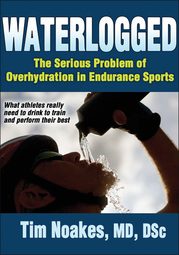
I have a book on my pile to read which looks interesting: Waterlogged
Here is a fascinating interview with the author - Tim Noakes
I have a book on my pile to read which looks interesting: Waterlogged
Here is a fascinating interview with the author - Tim Noakes
Drink to thirst regardless of how much weight you lose. The ACSM guideline that one should not lose more than 2 percent body weight is contrary to the published evidence and the findings in elite athletes that drinking "ahead of thirst" impairs exercise performance.
Can you talk a little bit about the history of dehydration and sports marketing?
One of the principles of selling a product, and if it’s a medical product and you make medical claims, is that you must maximize your market. In my view, those 1996 guidelines, what they do is they maximize the markets for sports drinks. What they are essentially saying is that it’s dangerous to lose any weight during exercise. In other words, it doesn’t matter what exercise you’re doing, you must drink at the same rate that you are sweating. And you mustn’t wait to become thirsty. What that means is that if you go to a gym and start exercising for 10 minutes, you must start drinking before you start, and within 10 minutes you must have drunk a certain amount. That increases the market size for your product, from just marathon runners to everyone who exercises. So when you go onto the street and you see runners jogging along for a couple of miles, they are carrying water with them. They become a target user for your product. They managed to change drinking behavior out of competitive sport for runners and cyclists and triathletes to gym exercisers as well. The consequence of that is that the sale of their product just rocketed thereafter. They had to demonize hydration and make it a disease. Rabu, 11 Juli 2012
Healthy Diet For Athletes
To provide the best performance on the playing field is not only a good workout and a good preparation for the conditional right healthy diet to do so. The body needs many nutrients for strenuous sports or he responds with exhaustion and injury. Basically, a full, rich in vitamins Nutrition with less sugar and alcohol are important. The diet consists of athletes from the same components as those of non athletes. However, because the athletes have a higher need for physical exertion. The healthy nutrition always consists of the components of protein, carbohydrates and fats.
Protein
The protein should be lean in order to stress the body too much. One should not only take animal protein to vegetable protein but also themselves. Suitable protein sources include meat, fish, milk and soy products, but also legumes. Protein is essential for the Metabolism, For building and maintaining muscle and recovery after sport. An athlete should take about 1-2 grams of protein per kilogram of body weight per day to himself, for tennis players should be a rich g, strength athletes expect 2g Too much protein is excreted by the kidneys and strain on the kidneys by a cause far not overly protein to eat.
Carbohydrates
Carbohydrates provide energy for daily activities. The body needs not only consume carbohydrates for physical activities, intellectual activities and the carbohydrates. The daily requirement should be 50% to about to be covered by carbohydrates, preferably from whole grains. Here are, above all, bread, pasta, rice, potatoes, legumes, and bananas. Au sugar and white flour products should be better without.
Protein
The protein should be lean in order to stress the body too much. One should not only take animal protein to vegetable protein but also themselves. Suitable protein sources include meat, fish, milk and soy products, but also legumes. Protein is essential for the Metabolism, For building and maintaining muscle and recovery after sport. An athlete should take about 1-2 grams of protein per kilogram of body weight per day to himself, for tennis players should be a rich g, strength athletes expect 2g Too much protein is excreted by the kidneys and strain on the kidneys by a cause far not overly protein to eat.
Carbohydrates
Carbohydrates provide energy for daily activities. The body needs not only consume carbohydrates for physical activities, intellectual activities and the carbohydrates. The daily requirement should be 50% to about to be covered by carbohydrates, preferably from whole grains. Here are, above all, bread, pasta, rice, potatoes, legumes, and bananas. Au sugar and white flour products should be better without.
Also fat metabolism needs to work to correct. Athletes and non athletes should rely on high-fat, cold-pressed oils and nuts are a valuable source. One should prefer vegetable fat, but if you eat lots of meat and dairy products, a lot of animal fat increases to three times a week is enough meat.
Vitamins and Minerals
Belong to any health diet, many Vitamins and minerals. They must be fed on the diet. Therefore in order to get enough vitamins and minerals you eat five times a day fruit and vegetables. That must be a big portion not always, an apple, a tomato on bread, some salad or vegetables for dinner and the relevant fruit or raw vegetables as a snack. Vitamins are found in all foods, especially whole grains.
Nutritional Supplements
Vitamin supplements can correct a deficiency in vitamins, but it should not be relied upon. In addition to vitamins and minerals are found in plant foods have photochemical. You have not yet explored all of it will be several thousand substances, but it is believed that they are very valuable to our health fitness. Athletes take in addition to the normal diet of many a food supplement products. To what extent this is necessary to decide the attending physician. Even for teenager athletes, such products are available, how far this sport performance has improved every athlete find themselves. These products are designed for athletes with three hours of sport a week, probably not necessary, but amateur athletes can train every day for 1-2 hours may improve their performance and regeneration.Roughage
Who in vegetables, eat salad, fruit and whole grain products, receives enough dietary fiber. The fiber binds to toxins in the gut and carry them out, one suspects that they reduce the risk of colorectal cancer. The feeling of satiety is increased by a lot of fiber.
Eat before and after training
If you eat before training more often charged too much and the stomach can not train properly. The last meal before the workout should be about 3 hours back. If you then still want to eat before a workout should be a little, eat a banana 30 minutes before the sport. Who can take a long time trainer during exercise crabs, it is recommended that one drink is enriched with carbohydrates to choose, thus, the body can absorb these carbohydrates quickly.
After training, you need a meal consisting of protein and carbohydrates. This meal promotes the regeneration of the body, which can, for example, chicken with rice and vegetables, pasta or potatoes with his salmon with cottage cheese.
Before, during and after the training need of the body well hydrated. Before training, one should drink enough, 05 liters of fluid in addition to the normal amount of 1.5 liters, sports drink on long units must also during exercise. After sport, the depots are replenished.
Remove and eat healthy with sports
Sport is a great place with the Remove . support But only sports can not melt the fat. Anyone with sports remove like a lot of training and should not eat too little. You should stick to the same principles, but avoid alcohol and sugar completely. With a Calorie Calculator one can calculate his calorie consumption and calorie needs, who is about 500 calories below its demand will decrease on a regular basis without affecting its performance.
Selasa, 10 Juli 2012
Cut your food into smaller portions..it is more filling
This is intriguing.
So a big 1 lb steak doesn't look as filling as 4 quarterpounders.....
Both humans and animals use number as a cue to judge quantities of food, with larger numbers usually associated with larger quantities. Therefore, a food portion cut into multiple, bite-sized pieces may perceptually look more and therefore elicit greater satiation than the same portion presented as a single, large piece.
So a big 1 lb steak doesn't look as filling as 4 quarterpounders.....
Devina Wadhera, the lead author, suggests that "cutting up energy-dense meal foods into smaller pieces may be beneficial to dieters who wish to make their meal more satiating while also maintaining portion control."
Too much sitting is taking years off your life
That seems to be how this study is being reported anyway.
As usual, NHS Choices keep things on an even keel, nice and calm....
Sedentary behaviour and life expectancy in the USA: a cause-deleted life table analysis (full paper)
Interesting to see all the commentary on this one in various places:
Obesity Panacea made a good point:
These sorts of theoretical studies obviously need to be taken with a large dollop of salt (just like the recent Australian study which estimated that every hour of TV viewing shortens your life by 25 minutes). The point is simply that there is a non-negligible impact of sitting/TV viewing on mortality, and given the extremely high prevalence of these behaviours at the population level, they can have noticeable impact on the lifespan of the population as a whole.
As usual, NHS Choices keep things on an even keel, nice and calm....
ConclusionIn conclusion, the research does not alter the current advice in the UK for adults to have 150 minutes of moderately intensive activity such as cycling or fast walking each week. This research provides some evidence to put numbers on the link between sedentary behaviours such as sitting or watching television with life expectancy. It’s important to note that this type of research cannot determine that one causes the other; only what the size of an effect might be when given the link. Although the researchers corrected for confounders such as age and gender, nothing else was adjusted for.
Furthermore, there may have been other factors at play, such as smoking or illness, which influenced the results. There are other limitations to this study, some of which the authors noted:
- This study was based on the results of US participants, and therefore its findings may not apply to the UK population.
- Sedentary behaviours were identified by self-report, which makes the results less reliable. It is possible that participants did not accurately report their activity patterns and people may have felt more inclined to describe themselves as more active than they actually were.
Consequently, the Mail’s headline “Stand up if you want to live longer,” is misleading to the reader and should be interpreted with caution, although most of us could benefit from being more active.
- Life expectancy as noted by the authors is a population statistic and does not apply to individuals. The authors noted that these estimates are theoretical estimates only.
Muscle on the elderly
Just wanted to point to a couple of studies that I saw today. We know that retaining as much muscle as possible as we age for a whole bunch of reasons: function, trauma protection, balance, stronger bones, a reservoir of amino acids to support the immune system....etc
These two look interesting:
Old people need to train AND adding some additional protein helps.....
But they need to KEEP OFF STATINS.
Jumat, 06 Juli 2012
how long until the bionic man?
I had this press release sent to me today. Interesting stuff that would once have been science fiction. Controlling a robot with your mindControlling a toy robot with your mind. Brain researcher, Nick Ramsey, of the UMC Utrecht, has managed to get study subjects to do just that. It forms the basis of a brain-computer interface that will allow paralyzed people to control a computer.
“All four study subjects were able to control the robot very quickly”, explains Ramsey. “They all felt in control of the robot. This means that this type of brain-computer interface is very easy to master. Training is barely needed.” Ramsey is working on a brain-computer interface that will allow paralyzed people to control a computer. To achieve this, he hopes to implant electrodes into these patients’ brains to measure brain activity. This is necessary to ensure a good signal, but it also involves major surgery. Ramsey believes that controlling the robot through the MRI scanner will be a first step for these patients. If the paralyzed people manage to control the robot, the investigators and doctors may then decide to implant electrodes in their brains. Ramsey hopes to be able to implant electrodes for the first time in paralyzed patients for a simpler system this fall. Controlling a robot using electrodes is expected to be possible in a few years. Controlling the robot is part of Patrik Andersson’s PhD research. He was awarded his PhD on 4 July at the UMC Utrecht. His supervisors are Prof. Nick Ramsey, Prof. Max Viergever and Dr Josien Pluim. |
Stress, recovery and booze
Well I hear that Stress Slows Your Recovery From Workouts. I wonder if it is because stress makes us drink more?
Of course Marcora would tell us that the big problem is that stress makes everything feel harder psychologically.
Therefore, in light of our major findings, athletes and others undergoing bouts of strenuous exercise should undertake strategies to a) obviate the negative effects of chronic mental stress or b) monitor for stress and engage carefully in strenuous exercise when chronic stress is unavoidable.
Of course Marcora would tell us that the big problem is that stress makes everything feel harder psychologically.
Langganan:
Komentar (Atom)


