Jumat, 20 Juli 2012

More on Creatine

The BBC Panorama programme last night has caused a bit of interest in its expose that many of the products pushed for sports be they sports drinks, fancy footwear or BCAAs are actually pretty useless and in fact in some cases - drinking too much for example - can cause harm - reported here.

The paper behind this was in the BMJ

What actually crept into the programme at the end amid all of the debunking was a quiet statement that there are only two products that have really been found to have much in the way of positive benefits:  caffeine and creatine.

I have mentioned creatine a few times on here in the past.  I've tried it on and off and have never felt good with it - I cramp up and feel "dry".  I keep trying it again, although I've not had any for a couple of years.

Anyway, coincidentally I saw this abstract today of a review about Creatine, I've not read it yet, but the whole paper is available


Creatine is one of the most popular and widely researched natural supplements. The majority of studies have focused on the effects of creatine monohydrate on performance and health; however, many other forms of creatine exist and are commercially available in the sports nutrition/supplement market. Regardless of the form, supplementation with creatine has regularly shown to increase strength, fat free mass, and muscle morphology with concurrent heavy resistance training more than resistance training alone. Creatine may be of benefit in other modes of exercise such as high-intensity sprints or endurance training. However, it appears that the effects of creatine diminish as the length of time spent exercising increases. Even though not all individuals respond similarly to creatine supplementation, it is generally accepted that its supplementation increases creatine storage and promotes a faster regeneration of adenosine triphosphate between high intensity exercises. These improved outcomes will increase performance and promote greater training adaptations. More recent research suggests that creatine supplementation in amounts of 0.1 g/kg of body weight combined with resistance training improves training adaptations at a cellular and sub-cellular level. Finally, although presently ingesting creatine as an oral supplement is considered safe and ethical, the perception of safety cannot be guaranteed, especially when administered for long period of time to different populations (athletes, sedentary, patient, active, young or elderly).


Kamis, 19 Juli 2012

Diets to Lose Weight

lose weight
How to Loss weight? To answer this question asked by more and more people, all the time there are new formulas for weight loss and diets for weight loss developed by specialists.
Diets to Loss Most Popular

Every moment brings new weight loss diets, regimes of famous and miraculous remedies that promise to make you Loss weight. Among the most popular diets are:

Diet of points: diet for weight loss is a very popular in world, with different versions that were created over time but in practice they all follow the same format. Each type of food is worth so many points, you have points and can not exceed a certain number of points per day. It would be the same as counting calories.

Protein Diet: There are also some different versions of this diet that preaches eating more protein. In practice this diet recommends increased consumption of protein and a reduction in carbohydrate intake for those who want to Loss weight.

Soup Diet: this diet to Lose weight is to eat soup for lunch and / or dinner.

Diet of Teas: there are several versions, such as diet white tea, green tea, etc.. Recommends the consumption of slimming teas.

Formula to Loss weight fast there?

There are several formulas to Loss weight fast which are often published in various media, but the question is whether they are really effective. After all, there is no point to Lose weight fast in 3 days, 1 week or 1 month, if you then you gain all the weight they lost, causing what they call accordion effect. The ideal formula for losing weight should have a lasting effect, involving a dietary reeducation. Only then you will be able to maintain the ideal weight for a long time.

Selasa, 17 Juli 2012

strong snatches

This is just impressive to watch.  I am not saying this is how you should train, just that this is a great set of lifts to watch.  via Marc Keys

Serving SIzes....

Well there is more to it than this......but come on calories do matter

Serving Sizes Around the World
From: InsuranceQuotes.org

Senin, 16 Juli 2012

Keep track of your diet to lose fat

Getting leaner
This is probably obvious, or should be, but it is something that I've learned recently.  Prompted by a post from Jeff Erno a few months ago I moved from my normal routine of just eating a good real food diet to actually tracking my intake and working to achieve certain macros and calorie levels.  It was quite instructive in terms of how much fat I was eating and how soon that crowded out other macro nutrients, if I was aiming for a particular calorie level in order to lose fat.  Nothing wrong with dietary fat....but ultimately calories count and it is easy to eat too much when you focus on butter and cream......

Once I started tracking and playing with a few other tricks (IF and carb cycling under the guidance of a coach) things started to really kick in and I am leaner than I've ever been.   I am sure I'll write more about this at some point.

Anyway, here is a press release about a study which highlights the potential value of tracking your food witha simple food journal if you want to lose fat.


Want to lose weight? Keep a food journal, don't skip meals and avoid going out to lunch


"For individuals who are trying to lose weight, the No. 1 piece of advice based on these study results would be to keep a food journal to help meet daily calorie goals. It is difficult to make changes to your diet when you are not paying close attention to what you are eating," said McTiernan, director of the Hutchinson Center's Prevention Center and a member of its Public Health Sciences Division.

Sabtu, 14 Juli 2012

Wittgenstein - a note to self

This is a reminder to myself of something I was thinking about around how to present my ideas on training.

I have always been impressed by Wittgenstein's Tractatus. 7 propositions stating the whole of his philosophy. Each except the last elucidated by some others.

Could I do that about fitness training?

Can it all be kept simple? A series of simple propositions?

So much of the fitness blogosphere thrives on complexity, jargon. Can we just make it clear and simple?

Zen?

Maybe not 7 propositions but certainly just a few key ideas.

What will be in the mix?

  • The goal is max fibre recruitment; the exercises, the protocol is secondary to this.
  • There is no such thing as cardio.
  • Much of what we call fitness is skill.
  • Safety is fundamental.
  • Posture has a role. Poor posture can mean less efficient movement and more wear and tear.
  • Sleep...just sleep
  • Eat appropriate quantity, optimum quality and suitable composition.
  • Stress needs managed.


Do you see where I am going with this?

Update - by the way, this is in no way an exhaustive list, just somethings that were going through my mind last night.  Also I had a reread of Hillfit and think that I actually articulated some of this pretty well in there, it is just that I wrote that about 8 months ago and have forgotten a lot of what I presented.

Kamis, 12 Juli 2012

Overhydration...

Every now and again I get sent an infographic to put on this blog.  They can be quite good and nicely presented, and I am not naive - I realise that they usually contain a link to some business, they are viral to generate traffic.  Anyway,  I got one today all about how we should drink loads and loads of water.  Maybe, but I am reading more recently on the dangers of overhydration - diluting your electrolytes.

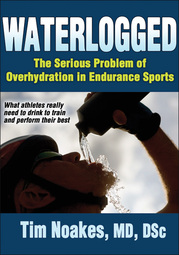
I have a book on my pile to read which looks interesting:  Waterlogged

Here is a fascinating interview with the author - Tim Noakes


Drink to thirst regardless of how much weight you lose. The ACSM guideline that one should not lose more than 2 percent body weight is contrary to the published evidence and the findings in elite athletes that drinking "ahead of thirst" impairs exercise performance.


Can you talk a little bit about the history of dehydration and sports marketing?
One of the principles of selling a product, and if it’s a medical product and you make medical claims, is that you must maximize your market. In my view, those 1996 guidelines, what they do is they maximize the markets for sports drinks. What they are essentially saying is that it’s dangerous to lose any weight during exercise. In other words, it doesn’t matter what exercise you’re doing, you must drink at the same rate that you are sweating. And you mustn’t wait to become thirsty. What that means is that if you go to a gym and start exercising for 10 minutes, you must start drinking before you start, and within 10 minutes you must have drunk a certain amount. That increases the market size for your product, from just marathon runners to everyone who exercises. So when you go onto the street and you see runners jogging along for a couple of miles, they are carrying water with them. They become a target user for your product. They managed to change drinking behavior out of competitive sport for runners and cyclists and triathletes to gym exercisers as well. The consequence of that is that the sale of their product just rocketed thereafter. They had to demonize hydration and make it a disease.