In the theme of the last one....
Bosses Who Work Out Are Nicer
We also find that the relationship between supervisor stress and abusive behaviour can be diminished when supervisors engage in moderate levels of physical exercise. (from a study here)
Senin, 30 Januari 2012

it does not matter but it matters a lot.....part 2
A few months ago I wrote a post about the way in which spending time with my Dad who has dementia had caused me to reassess bits of my life. It placed so much in perspective, work and relationships but also all the time I spend thinking about diet and training. In many ways none of this matters....but in other ways this is so important, so vital to live and experience this world. Take all that it has to offer.
I was with him again this weekend. It was so good just to sit with him in his confusion. Family is a constant for him - he recognises us and while he is not sure where or when he is, our presence calms him and gives him an anchor. I held his hand for a couple of hours while he talked or slept, my mum holding the other. When his eyes opened and he saw me and smiled, sighed and said "You're a good lad." I melted. I want to look after and protect him to carry this burden. Yet I have to leave and return to a different world of work and worry. In the last 2 weeks work has been unpleasant, hard. It feels beyond me at the moment, demanding skills I don't have, resources that I cannot summon. But the atmosphere has changed and it is all macho posturing now, alpha males striding their territory.
The petulant anger and behaviour of people has bemused me. When their tempers flared I just felt the pointlessness of it all. I felt like laughing in their faces, or alternatively smacking them....I am sure I could out alpha with an elbow strike. In a few decades none of this will matter. When all else starts to fade, it is the simple things: a smile, a hug, a look of love that create meaning and value.
That gives me strength. I know that I can walk away because what matters is not what they are worried about. The key is in the smiles, the love.
The hills remain. Family, my love and the hills remain. Whatever else is going on there is an escape. And fitness facilitates all that. If anything I can do will prevent me ending up like my Dad it is good and worthwhile. Yet beyond that we are all going to die. There is an end to all this. What goes on? What is really worthwhile?
I was with him again this weekend. It was so good just to sit with him in his confusion. Family is a constant for him - he recognises us and while he is not sure where or when he is, our presence calms him and gives him an anchor. I held his hand for a couple of hours while he talked or slept, my mum holding the other. When his eyes opened and he saw me and smiled, sighed and said "You're a good lad." I melted. I want to look after and protect him to carry this burden. Yet I have to leave and return to a different world of work and worry. In the last 2 weeks work has been unpleasant, hard. It feels beyond me at the moment, demanding skills I don't have, resources that I cannot summon. But the atmosphere has changed and it is all macho posturing now, alpha males striding their territory.
The petulant anger and behaviour of people has bemused me. When their tempers flared I just felt the pointlessness of it all. I felt like laughing in their faces, or alternatively smacking them....I am sure I could out alpha with an elbow strike. In a few decades none of this will matter. When all else starts to fade, it is the simple things: a smile, a hug, a look of love that create meaning and value.
That gives me strength. I know that I can walk away because what matters is not what they are worried about. The key is in the smiles, the love.
The hills remain. Family, my love and the hills remain. Whatever else is going on there is an escape. And fitness facilitates all that. If anything I can do will prevent me ending up like my Dad it is good and worthwhile. Yet beyond that we are all going to die. There is an end to all this. What goes on? What is really worthwhile?
oh no, not stretching again......
Sorry to return to this subject, especially with the pumped up and over-hyped video, but I think this guy makes good points on the impact of stretching before exercise. Once you get past the music at the start, it is pretty solid stuff too.
As we have said before, static stretching pre-exercise tends to lead to a poorer performance (the Sock Doc has said this in a great article)
As we have said before, static stretching pre-exercise tends to lead to a poorer performance (the Sock Doc has said this in a great article)
Glute activation
Just a couple of quick links connected by glutes.....
Martin Berkhan (you must have heard of him) posted this on Twitter and Facebook, and it is interesting as a study:
Low load exercises targeting the gluteal muscle group acutely enhance explosive power output in elite athletes.
It is this idea of activating the glutes as a warm up and it now seems to have some support from research.
I put a glute exercise in the Hillfit exercise routine - a hip extension / glute bridge - because I think that it is important to get the glutes firing, especially given that our habitual sitting posture tends to see those muscles under activated. I was really focussing on a big 3 - squat (wall sit), pushup and row - but wanted to add a hip hinge/glute move.
Interestingly I saw this post today from Mike Reinold on the kneeling hip thrust as a simple glute exercise. I was messing with this tonight using bands
Martin Berkhan (you must have heard of him) posted this on Twitter and Facebook, and it is interesting as a study:
Low load exercises targeting the gluteal muscle group acutely enhance explosive power output in elite athletes.
It is this idea of activating the glutes as a warm up and it now seems to have some support from research.
I put a glute exercise in the Hillfit exercise routine - a hip extension / glute bridge - because I think that it is important to get the glutes firing, especially given that our habitual sitting posture tends to see those muscles under activated. I was really focussing on a big 3 - squat (wall sit), pushup and row - but wanted to add a hip hinge/glute move.
Interestingly I saw this post today from Mike Reinold on the kneeling hip thrust as a simple glute exercise. I was messing with this tonight using bands
Sabtu, 28 Januari 2012
The Science Behind the Paleolithic Diet.
Hat-tip to Melissa McEwen for posting the above-titled video on Facebook. It's 27 minutes of common sense from Matt Lalonde Ph.D Harvard University Chemistry and Chemical Biology.
Jumat, 27 Januari 2012
More Barefoot Research....
Thanks to Adam Dean for pointing this out.
Almost a year ago I had a couple of posts (here and here) about a Harvard Professor who was doing research into barefoot running. The research continues, and Wired Magazine had a feature on his two latest studies which have been published just this month. Their piece is called More Evidence Supports Barefoot Running and points to Daniel Lieberman's latest work:
Foot Strike and Injury Rates in Endurance Runners: a retrospective study.
Effects of Footwear and Strike Type on Running Economy.
Almost a year ago I had a couple of posts (here and here) about a Harvard Professor who was doing research into barefoot running. The research continues, and Wired Magazine had a feature on his two latest studies which have been published just this month. Their piece is called More Evidence Supports Barefoot Running and points to Daniel Lieberman's latest work:
If you’re a runner, start striking with your forefoot. And wear those goofy minimalist shoes while you’re at it. Your body will thank you.The two studies are:
Those are the findings of a pair of studies by Daniel Lieberman, a professor of human evolutionary biology at Harvard University. He found runners who use a forefoot strike face a significantly lower risk of repetitive stress injuries, and barely there running shoes produce more efficient movement than conventional kicks.
Foot Strike and Injury Rates in Endurance Runners: a retrospective study.
PURPOSE:(interesting that cross country running seems risky whatever you do!)
This retrospective study tests if runners who habitually forefoot strike have different rates of injury than runners who habitually rearfoot strike.
METHODS:
We measured the strike characteristics of middle and long distance runners from a collegiate cross country team and quantified their history of injury, including the incidence and rate of specific injuries, the severity of each injury, and the rate of mild, moderate and severe injuries per mile run.
RESULTS:
Of the 52 runners studied, 36 (59%) primarily used a rearfoot strike and 16 (31%) primarily used a forefoot strike. Approximately 74% of runners experienced a moderate or severe injury each year, but those who habitually rearfoot strike had approximately twice the rate of repetitive stress injuries than individuals who habitually forefoot strike. Traumatic injury rates were not significantly different between the two groups. A generalized linear model showed that strike type, sex, race distance, and average miles per week each correlate significantly (p<0.01) with repetitive injury rates.
CONCLUSIONS:
Competitive cross country runners on a college team incur high injury rates, but runners who habitually rearfoot strike have significantly higher rates of repetitive stress injury than those who mostly forefoot strike. This study does not test the causal bases for this general difference. One hypothesis, which requires further research, is that the absence of a marked impact peak in the ground reaction force during a forefoot strike compared to a rearfoot strike may contribute to lower rates of injuries in habitual forefoot strikers.
Effects of Footwear and Strike Type on Running Economy.
PURPOSE:
This study tests if running economy differs in minimal shoes versus standard running shoes with cushioned, elevated heels and arch supports, and in forefoot versus rearfoot strike gaits.
METHODS:
We measured the cost of transport (mlO2/kg/m) in subjects who habitually run in minimal shoes or barefoot while they were running at 3.0 m/s on a treadmill during forefoot and rearfoot striking while wearing minimal and standard shoes, controlling for shoe mass and stride frequency. Force and kinematic data were collected when shod and barefoot to quantify differences in knee flexion, arch strain, plantarflexor force production, and Achilles tendon-triceps surae strain.
RESULTS:
After controlling for stride frequency and shoe mass, runners were 2.41% more economical in the minimal shoe condition when forefoot striking and 3.32% more economical in the minimal shoe condition when rearfoot striking (p<0.05). In contrast, forefoot and rearfoot striking did not differ significantly in cost for either minimal or standard shoe running. Arch strain was not measured in shoes condition but was significantly greater during forefoot than rearfoot striking when barefoot. Plantarflexor force output was significantly higher in forefoot than rearfoot striking, and in barefoot than shod running. Achilles tendon-triceps surae strain and knee flexion were also lower in barefoot than standard shoe running.
CONCLUSIONS:
Minimally shod runners are modestly but significantly more economical than traditionally shod runners regardless of strike type, after controlling for shoe mass and stride frequency. The likely cause of this difference is more elastic energy storage and release in the lower extremity during minimal shoe running.
Kamis, 26 Januari 2012
Lifehacker on the dangers of sitting
I've had stuff here before on the health impact of spending too much time sitting down. Lifehacker had a good piece on it today too:
Do you sit in an office chair or on your couch for more than six hours a day? Then here are some disturbing facts: Your risk of heart disease has increased by up to 64 percent. You're shaving off seven years of quality life. You're also more at risk for certain types of cancer. Simply put, sitting is killing you. That's the bad news. The good news: It's easy to counteract no matter how lazy you are.Their prescription was:
Happily, you only need to do two things to counter the effects of sitting all day:Whether you're a couch potato watching marathons of Firefly or an office worker sitting in front of a computer, an Australian study suggests short breaks from sitting once an hour can alleviate most of the problems described above
- Remember to stand once an hour.
- Get about 30 minutes of activity per day.
Inadequate sleep and obesity
Here is another one on sleep that I saw today in my trawl of the new research. Nothing that we have not seen before but this is a review that tries to pull together some of the studies:
Does inadequate sleep play a role in vulnerability to obesity?
There you go. We are back to the need for getting enough sleep if you want to be lean.
There was another related study today:
Sleep Duration and BMI in a Sample of Young Adults
Does inadequate sleep play a role in vulnerability to obesity?
The prevalence of obesity is increasing rapidly worldwide, which is cause for concern because obesity increases the risk of cardiovascular disease and diabetes, reduces life expectancy, and impairs quality of life. A better understanding of the risk factors for obesity is therefore a critical global health concern, and human biologists can play an important role in identifying these risk factors in various populations. The objective of this review is to present the evidence that inadequate sleep may be a novel risk factor associated with increased vulnerability to obesity and associated cardiometabolic disease. Experimental studies have found that short-term sleep restriction is associated with impaired glucose metabolism, dysregulation of appetite, and increased blood pressure. Observational studies have observed cross-sectional associations between short sleep duration (generally <6 h per night) and increased body mass index or obesity, prevalent diabetes, and prevalent hypertension. Some studies also reported an association between self-reported long sleep duration (generally >8 h per night) and cardiometabolic disease. A few prospective studies have found a significant increased risk of weight gain, incident diabetes, and incident hypertension associated with inadequate sleep. Given the potential link between inadequate sleep and obesity, a critical next step is to identify the social, cultural, and environmental determinants of sleep, which would help to identify vulnerable populations. Future human biology research should consider variation in sleep characteristics among different populations and determine whether the associations between sleep and obesity observed in Western populations persist elsewhere.
There you go. We are back to the need for getting enough sleep if you want to be lean.
There was another related study today:
Sleep Duration and BMI in a Sample of Young Adults
In multivariable-adjusted linear regression models, an hour increase in sleep was associated with a −0.38 (−0.70, −0.048) BMI in men. Men who slept <7 h had a 1.4 unit higher mean BMI (27.9; 95% confidence interval (CI): 26.9, 28.9) than men who slept 7–9 h/day (26.5; 95% CI: 26.1, 27.0). Prevalence estimates of overweight (BMI ≥25) and obesity (BMI ≥30) were also inversely associated with sleep duration among men.
Reasons to get moving...
First, a music video. What else but...?
Part 1. Get slimmer.
Insulin increases the amount of nutrients entering adipocytes, which makes us fat and hungry.
Er, just a minute!
If increasing the amount of nutrients entering cells makes us hungry, exercise (which increases the amount of nutrients entering muscle cells) would make us hungry. It doesn't. See Fig. 1. in Influence of resistance and aerobic exercise on hunger, circulating levels of acylated ghrelin, and peptide YY in healthy males.
If going for a walk outdoors makes you hungry, you're doing it wrong. Wrap up warm, as feeling cold increases hunger. Low blood glucose level also increases hunger, so don't over-exercise while on a long-term ketogenic diet.
By the way, insulin also increases the amount of nutrients entering muscle cells.
Q. What determines the relative amounts of nutrients entering adipocytes vs muscle cells?
A. The relative insulin sensitivities of adipocytes vs muscle cells.
Adipocytes are sensitive to insulin until they become full. To reduce the amount of nutrients entering adipocytes, divert more nutrients to muscle cells by increasing their insulin sensitivity. Emptying muscle cells by doing low-intensity exercise increases their insulin sensitivity. High-intensity exercise increases their insulin sensitivity.
Part 2. Prevent/reverse age-related sarcopenia (muscle loss).
See Use 'em or lose 'em. As diverting more nutrients to muscle cells increases muscle mass, increasing their insulin sensitivity results in increased muscle mass, unless you're eating way below maintenance calories. High-intensity exercise results in more muscle mass gain than low-intensity exercise.
Part 3. Make your brain work properly.
Thanks to Chris Highcock, who gave me a complimentary copy of Hillfit, I found IL-6 and IL-10 Anti-Inflammatory Activity Links Exercise to Hypothalamic Insulin and Leptin Sensitivity through IKKβ and ER Stress Inhibition.
In plain English, this means that exercise increases both insulin and leptin sensitivity in the hypothalamus. As the hypothalamus controls appetite and both insulin & leptin are appetite-suppressing, the net result is less appetite.
Part 1. Get slimmer.
Insulin increases the amount of nutrients entering adipocytes, which makes us fat and hungry.
Er, just a minute!
If increasing the amount of nutrients entering cells makes us hungry, exercise (which increases the amount of nutrients entering muscle cells) would make us hungry. It doesn't. See Fig. 1. in Influence of resistance and aerobic exercise on hunger, circulating levels of acylated ghrelin, and peptide YY in healthy males.
If going for a walk outdoors makes you hungry, you're doing it wrong. Wrap up warm, as feeling cold increases hunger. Low blood glucose level also increases hunger, so don't over-exercise while on a long-term ketogenic diet.
By the way, insulin also increases the amount of nutrients entering muscle cells.
Q. What determines the relative amounts of nutrients entering adipocytes vs muscle cells?
A. The relative insulin sensitivities of adipocytes vs muscle cells.
Adipocytes are sensitive to insulin until they become full. To reduce the amount of nutrients entering adipocytes, divert more nutrients to muscle cells by increasing their insulin sensitivity. Emptying muscle cells by doing low-intensity exercise increases their insulin sensitivity. High-intensity exercise increases their insulin sensitivity.
Part 2. Prevent/reverse age-related sarcopenia (muscle loss).
See Use 'em or lose 'em. As diverting more nutrients to muscle cells increases muscle mass, increasing their insulin sensitivity results in increased muscle mass, unless you're eating way below maintenance calories. High-intensity exercise results in more muscle mass gain than low-intensity exercise.
Part 3. Make your brain work properly.
Thanks to Chris Highcock, who gave me a complimentary copy of Hillfit, I found IL-6 and IL-10 Anti-Inflammatory Activity Links Exercise to Hypothalamic Insulin and Leptin Sensitivity through IKKβ and ER Stress Inhibition.
In plain English, this means that exercise increases both insulin and leptin sensitivity in the hypothalamus. As the hypothalamus controls appetite and both insulin & leptin are appetite-suppressing, the net result is less appetite.
Rabu, 25 Januari 2012
More on stretching...for Bozos?
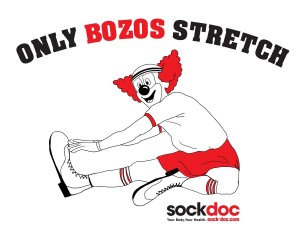
Anyway, Zero Drop has posted this list of
10 Reasons Why Runners Should Not Stretch
- Stretching is exercise for the muscles like sea water is hydration for the body. When you're desperate for relief, it feels so right but only makes things worse.
- All athletes, especially runners, are so passionate about stretching. They defend it like their political association, religion, or family. I think many of them may have pictures of their kids in their wallets doing all types of cool stretches that they show their coworkers every day at the water cooler.
- Runners will follow any trend they think will make them run faster. Whether it's a new supplement, pair of socks, pair or shoes, custom orthotics, or stretching. They're the first in line for the Kool-Aid.
- Stretching is a conditioned behaviour, not one we are innately born with. I see my kids run, jump, climb, throw things, and carry objects of all sizes. They move well, and efficiently. I've never seen them stretch. Their developing nervous systems know better.
- The day I see my dog holding a stretch is the day I'll start stretching too.
- Flexibility is a reflection of overall health and fitness. Stretching does absolutely nothing for health or fitness. It's not exercise. It's not a warm-up or a cool-down. And it definitely doesn't substitute for restful sleep or a wholesome diet.
- Yoga is not stretching. Stretching is not yoga. Enough of that claim.
- Make sure you stretch if you want to weaken muscles, promote injuries, decrease performance, delay tissue healing, and have absolutely way too much free time.
- Stretching reduces injuries and improves endurance performance just like certain shoes will make you run or jump faster. Neither claim is true.
- I enjoy watching runners stretch. They must stretch because they think they will run faster. I bet they believe in Sasquatch too.
Sock Doc's full article STOP STRETCHING is definitely worth reading
Stretching may increase your flexibility, but you will most likely be weaker and the results are often short-lived. Saying that stretching reduces injuries or improves endurance performance, (the two main reasons given for stretching), is like saying certain shoes will make you run or jump faster. Many continue to make both these claims, yet neither has ever been proven, and many still buy the shoes and stretch with them on. Stretching is not exercise and not a warm-up before a run or any activity. Aerobic activity is the best warm-up as it increases flexibility in a safe way while improving oxygen utilization, lung capacity, and fat burning.
So balance your muscles and your entire body by balancing your life with proper exercise, diet, and other lifestyle factors. Stop drinking that Kool-Aid propaganda and just say “No!” to stretching!
Sleep more and it is easier to lose wieght
Thanks to Matthew Clarke for pointing this out.
There is an interesting study in the International Journal of Obesity this month. Lots of times in the past I've pointed to things saying to get more sleep for lots of health reasons - inflammation, stress reduction etc. I have just drafted up an article on sleep and I talk about the signals that you give to your body. Compromised sleep sends a signal that you are under threat....so you produce stress hormones to get you ready for the threat.....and chronically elevated stress hormones (cortisol etc) lead to all sorts of problems....including obesity.
This new study found that those who slept more were better at losing weight! Lowered stress was also a success factor, although that is linked - sleep more a way of reducing stress.
Anyway, here is the abstract:
Impact of sleep, screen time, depression and stress on weight change in the intensive weight loss phase of the LIFE study
There is an interesting study in the International Journal of Obesity this month. Lots of times in the past I've pointed to things saying to get more sleep for lots of health reasons - inflammation, stress reduction etc. I have just drafted up an article on sleep and I talk about the signals that you give to your body. Compromised sleep sends a signal that you are under threat....so you produce stress hormones to get you ready for the threat.....and chronically elevated stress hormones (cortisol etc) lead to all sorts of problems....including obesity.
This new study found that those who slept more were better at losing weight! Lowered stress was also a success factor, although that is linked - sleep more a way of reducing stress.
Anyway, here is the abstract:
Impact of sleep, screen time, depression and stress on weight change in the intensive weight loss phase of the LIFE study
Background:
The LIFE study is a two-phase randomized clinical trial comparing two approaches to maintaining weight loss following guided weight loss. Phase I provided a nonrandomized intensive 6-month behavioral weight loss intervention to 472 obese (body mass index 30–50) adult participants. Phase II is the randomized weight loss maintenance portion of the study. This paper focuses on Phase I measures of sleep, screen time, depression and stress.
Methods:
The Phase I intervention consisted of 22 group sessions led over 26 weeks by behavioral counselors. Recommendations included reducing dietary intake by 500 calories per day, adopting the Dietary Approaches to Stop Hypertension (DASH) dietary pattern and increasing physical exercise to at least 180 min per week. Measures reported here are sleep time, insomnia, screen time, depression and stress at entry and post-weight loss intervention follow-up.
Results:
The mean weight loss for all participants over the intensive Phase I weight loss intervention was 6.3 kg (s.d. 7.1). Sixty percent (N=285) of participants lost at least 4.5 kg (10 lbs) and were randomized into Phase II. Participants (N=472) attended a mean of 73.1% (s.d. 26.7) of sessions, completed 5.1 (s.d. 1.9) daily food records/week, and reported 195.1 min (s.d. 123.1) of exercise per week. Using logistic regression, sleep time (quadratic trend, P=0.030) and lower stress (P=0.024) at entry predicted success in the weight loss program, and lower stress predicted greater weight loss during Phase I (P=0.021). In addition, weight loss was significantly correlated with declines in stress (P=0.048) and depression (P=0.035).
Conclusion:
Results suggest that clinicians and investigators might consider targeting sleep, depression and stress as part of a behavioral weight loss intervention.
Selasa, 24 Januari 2012
Some MovNat
Although it looks a bit warmer, this is much like the seminar I attended with the great Erwan Le Core back in December 2010.
By the way if you are wondering how this fits with my Hillfit approach, I think High Intensity Training, resistance training can quickly get you the strength that you need in order to practice MovNat Skills. Without basic strength you will never get far in terms of climbing etc. I do not discount all these skills, and I think there is value in becoming expert in them.....but strength.....exercise is something else.
By the way if you are wondering how this fits with my Hillfit approach, I think High Intensity Training, resistance training can quickly get you the strength that you need in order to practice MovNat Skills. Without basic strength you will never get far in terms of climbing etc. I do not discount all these skills, and I think there is value in becoming expert in them.....but strength.....exercise is something else.
Use 'em or lose 'em
Hello world. I'm back. The title is referring to our muscles. The following image is from Figure 1 of Chronic Exercise Preserves Lean Muscle Mass in Masters Athletes.

I'm not going to start doing chronic exercise, but the above is a great incentive to continue with the walking.
I'm not going to start doing chronic exercise, but the above is a great incentive to continue with the walking.
Senin, 23 Januari 2012
Exercise and insulin sensitivity: both hard AND easy training.......
We've had material up here before on the way in which exercise can promote insulin sensitivity - even brief intense exercise.
I spotted this new study that highlights that both endurance and resistance training can have an impact, but on different elements of that sensitivity:
Insulin Sensitivity After Maximal and Endurance Resistance Training
It is something that I point to in Hillfit - intense exercise to failure that can tap into all the muscle fibres - slow, intermediate and fast twitch - lets you drain them of glucose in a way in which endurance exercise does not allow....and endurance exercise does have some benefits.
Actually it is pretty much similar to what Mark Sisson has been saying for a while:
I spotted this new study that highlights that both endurance and resistance training can have an impact, but on different elements of that sensitivity:
Insulin Sensitivity After Maximal and Endurance Resistance Training
Maximum Resistance Training (MRT) led to a greater increase in glucose uptake capacity (in muscles), whereas Endurance Resistance Training (ERT) led to greater insulin sensitivity, supporting the recommendation of both MRT and ERT as primary intervention approaches for individuals at a risk of developing type 2 diabetes.
It is something that I point to in Hillfit - intense exercise to failure that can tap into all the muscle fibres - slow, intermediate and fast twitch - lets you drain them of glucose in a way in which endurance exercise does not allow....and endurance exercise does have some benefits.
Actually it is pretty much similar to what Mark Sisson has been saying for a while:
- Lift Heavy things
- Move around alot at a slow pace
I do a combination of high-intensity intervals and low-intensity walking—and very little of the moderate-intensity aerobics that most people do. I call this my barbell aerobics strategy because, like a barbell, it uses both ends of the intensity spectrum—with almost nothing in between.which is also of course Nassim Taleb's approach
Minggu, 22 Januari 2012
Warm up?
I have had stuff on here before about warm ups, mainly discouraging static stretching as a warm up since it seems to impair performance and do nothing to prevent injuries or soreness. Dynamic stretches or mobility work seems to have more promise.
Anyway, there was a post on the excellent Sweat Science blog (reading that blog just makes me want to give up because he does all this stuff so well!) which looked at a recent study about the impact of different warm up protocols on swimming performance - The ideal warm up for swimmers
It is well worth reading the post and it prompted me to search around because initially I could not find the study to which it referred. I did find the actual thesis from the student who did the work however.
What is interesting to me is that 37% of the sample performed best with no warm up whatsoever. It may be specific to the event that was being measured and I am sure that there are confounding factors in the study, but it is something to think on. I think the conclusion that they reach - individuals differed in their response to different warm-ups is probably pretty accurate!
Anyway, there was a post on the excellent Sweat Science blog (reading that blog just makes me want to give up because he does all this stuff so well!) which looked at a recent study about the impact of different warm up protocols on swimming performance - The ideal warm up for swimmers
It is well worth reading the post and it prompted me to search around because initially I could not find the study to which it referred. I did find the actual thesis from the student who did the work however.
What is interesting to me is that 37% of the sample performed best with no warm up whatsoever. It may be specific to the event that was being measured and I am sure that there are confounding factors in the study, but it is something to think on. I think the conclusion that they reach - individuals differed in their response to different warm-ups is probably pretty accurate!
Dr M C Aldhous - Writer and Editor
 |
| Where I was this morning.... |
Anyway, this post is just to say that a big credit for the quality of the book goes to my editor / proof reader. Dr M C Aldhous went through the text, proof reading, reference checking and generally tightening up my prose. Her input was vital in getting the thing together in a decent state such that we were happy to put it up for sale.
It is one thing writing blogs, but pulling together something a bit more substantial and then being audacious enough to try to sell it is a different proposotion, having a proper professional editor was a huge help.
Dr M C Aldhous is an immunologist by profession with a background in HIV and IBD, but she has a sideline in freelance editing, so if you have any writing that you want to have checked over, checked and redrafted, then I would suggest that you get in touch for a quote. Email her at mcaldhousATgmail.com
Sabtu, 21 Januari 2012
Good quote from Coach Rutherford
I heard this as I was walking home last night after a long day at work and a crap week.
This week Robb Wolf had Michael Rutherford on the podcast and it was a fun listen, easvesdropping on some pals chatting away really. One quote stood out:
Your best ally as you age is to take as much muscle mass into your latter years as possible.
Of course it is.
This week Robb Wolf had Michael Rutherford on the podcast and it was a fun listen, easvesdropping on some pals chatting away really. One quote stood out:
Your best ally as you age is to take as much muscle mass into your latter years as possible.
Of course it is.
Jumat, 20 Januari 2012
Balance Training
Balance is fascinating. On Clarence Bass recommendation a couple of year ago I read Scott McCredie’s book Balance: In Search of the Lost Sense (2007). It is really interesting and gives you a new appreciation for the importance of balance.
In Hillfit I mention balance as a complex of three different systems:
I've mentioned the proprioceptive systems before in terms of ankle sprains. Anyway, all that is just introduction to this study which I found today.
Vestibular rehabilitation therapy: review of indications, mechanisms, and key exercises.
The whole paper is available here
with some interesting simple exercises to develop this amazing sense.
In Hillfit I mention balance as a complex of three different systems:
- the visual
- the proprioceptive
- the vestibular - the inner ear sense that positions you in space relative to gravity, your equilibrium
I've mentioned the proprioceptive systems before in terms of ankle sprains. Anyway, all that is just introduction to this study which I found today.
Vestibular rehabilitation therapy: review of indications, mechanisms, and key exercises.
Vestibular rehabilitation therapy (VRT) is an exercise-based treatment program designed to promote vestibular adaptation and substitution. The goals of VRT are 1) to enhance gaze stability, 2) to enhance postural stability, 3) to improve vertigo, and 4) to improve activities of daily living. VRT facilitates vestibular recovery mechanisms: vestibular adaptation, substitution by the other eye-movement systems, substitution by vision, somatosensory cues, other postural strategies, and habituation. The key exercises for VRT are head-eye movements with various body postures and activities, and maintaining balance with a reduced support base with various orientations of the head and trunk, while performing various upper-extremity tasks, repeating the movements provoking vertigo, and exposing patients gradually to various sensory and motor environments. VRT is indicated for any stable but poorly compensated vestibular lesion, regardless of the patient's age, the cause, and symptom duration and intensity. Vestibular suppressants, visual and somatosensory deprivation, immobilization, old age, concurrent central lesions, and long recovery from symptoms, but there is no difference in the final outcome. As long as exercises are performed several times every day, even brief periods of exercise are sufficient to facilitate vestibular recovery. Here the authors review the mechanisms and the key exercises for each of the VRT goals.
The whole paper is available here
with some interesting simple exercises to develop this amazing sense.
Rabu, 18 Januari 2012
More on messed up sleep and obesity
Hot on the heels of that last study here is another. It is again pointing to messed up sleep leading to messed up appetite and eating patterns.
The effect of sleep restriction on snacking behaviour during a week of simulated shiftwork.
The effect of sleep restriction on snacking behaviour during a week of simulated shiftwork.
Due to irregular working hours shiftworkers experience circadian disruption and sleep restriction. There is some evidence to indicate that these factors adversely affect health through changes in snacking behaviour. The aim of this study was to investigate the impact of sleep restriction, prior wake and circadian phase on snacking behaviour during a week of simulated shiftwork. Twenty-four healthy males (age: 22.0±3.6 years, mean±SD) lived in a sleep laboratory for 12 consecutive days. Participants were assigned to one of two schedules: a moderate sleep restriction condition (n=10) equivalent to a 6-h sleep opportunity per 24h or a severe sleep restriction condition (n=14) equivalent to a 4-h sleep opportunity per 24h. In both conditions, sleep/wake episodes occurred 4h later each day to simulate a rotating shiftwork pattern. While living in the laboratory, participants were served three meals and were provided with either five (moderate sleep restriction condition) or six (severe sleep restriction condition) snack opportunities daily. Snack choice was recorded at each opportunity and assigned to a category (sweet, savoury or healthy) based on the content of the snack. Data were analysed using a Generalised Estimating Equations approach. Analyses show a significant effect of sleep restriction condition on overall and sweet snack consumption. The odds of consuming a snack were significantly greater in the severe sleep restriction condition (P<0.05) compared to the moderate sleep restriction condition. In particular, the odds of choosing a sweet snack were significantly increased in the severe sleep restriction condition (P<0.05). Shiftworkers who are severely sleep restricted may be at risk of obesity and related health disorders due to elevated snack consumption and unhealthy snack choice. To further understand the impact of sleep restriction on snacking behaviour, future studies should examine physiological, psychological and environmental motivators.
Body by Science recommends Hillfit
Doug had already given a great review to Hillfit, but today on Body by Science, he had more to say:
 As I said previously I have massive respect for Doug. He is my inspiration and mentor and to read these words from him is fantastic.
Read more about the book and order it from www.hillfit.com
Chris Highcock over at www.conditioningresearch.com has a new book out called Hillfit. It is basically a high intensity training program directed toward hikers and climbers. Even though it is directed at this particular sport, it is pertinent to any sport as it effectively shows how to combine (and separate) physical conditioning and skill conditioning in the most user-friendly fashion I have seen to date.
Read more about the book and order it from www.hillfit.com
Autophagy again - promoted by exercise
I've referenced autophagy before in relation to fasting. Scientific American today pointed to a new study in Nature which identifies exercise induced autophagy.
Here is the abstract - Exercise-induced BCL2-regulated autophagy is required for muscle glucose homeostasis
“Our findings demonstrate that exercise is a potent inducer of autophagy,” the researchers wrote. “Autophagy induction may contribute to the beneficial metabolic effects of exercise,” they concluded.
Here is the abstract - Exercise-induced BCL2-regulated autophagy is required for muscle glucose homeostasis
Exercise has beneficial effects on human health, including protection against metabolic disorders such as diabetes1. However, the cellular mechanisms underlying these effects are incompletely understood. The lysosomal degradation pathway, autophagy, is an intracellular recycling system that functions during basal conditions in organelle and protein quality control2. During stress, increased levels of autophagy permit cells to adapt to changing nutritional and energy demands through protein catabolism3. Moreover, in animal models, autophagy protects against diseases such as cancer, neurodegenerative disorders, infections, inflammatory diseases, ageing and insulin resistance4, 5, 6. Here we show that acute exercise induces autophagy in skeletal and cardiac muscle of fed mice. To investigate the role of exercise-mediated autophagy in vivo, we generated mutant mice that show normal levels of basal autophagy but are deficient in stimulus (exercise- or starvation)-induced autophagy. These mice (termed BCL2 AAA mice) contain knock-in mutations in BCL2 phosphorylation sites (Thr69Ala, Ser70Ala and Ser84Ala) that prevent stimulus-induced disruption of the BCL2–beclin-1 complex and autophagy activation. BCL2 AAA mice show decreased endurance and altered glucose metabolism during acute exercise, as well as impaired chronic exercise-mediated protection against high-fat-diet-induced glucose intolerance. Thus, exercise induces autophagy, BCL2 is a crucial regulator of exercise- (and starvation)-induced autophagy in vivo, and autophagy induction may contribute to the beneficial metabolic effects of exercise.
A vicious circle of stress
Stress can make you fat – and being obese can create stress.
The paper is in medical hypotheses....
Stress in obesity: Cause or consequence?
A vicious circle of stress
Getting fatter can potentially trigger the stress response, which in turn encourages additional weight gain.
"When you go up in weight, your body also comes under stress. That probably has a self-reinforcing effect – so you get even fatter," Foss explains.
But dieting can also stimulate cortisol production, which in turn may trigger the stress response and thereby counter the weight loss.
"Should our hypothesis turn out to be correct, it would mean that you'll have to break this stress pattern if you want to halt the weight increase," says Foss.
The paper is in medical hypotheses....
Stress in obesity: Cause or consequence?
Abstract
Obesity is a global public health challenge that increases the risk of various diseases including type 2 diabetes mellitus, hypertension and cancer, and will in the future cause further increases in the incidence of chronic disease. Understanding the mechanisms of obesity is critical if we are to prevent and treat this pandemic challenge. Diet and physical activity have traditionally been the major tasks in preventing and treating obesity. However, other mechanisms are now also being considered in the quest for knowledge and understanding of obesity, including the body’s stress system and cortisol release. While it seems evident that stress is a cause of obesity, whether stress is also a consequence of obesity has up to now only briefly been discussed. The aim of this article is to elucidate how stress and obesity might be linked and discuss the cause/consequence relationship between the stress response and obesity. Our hypothesis is that stress and obesity interfere by positive feedback. This may be an important issue in both our understanding and coping of obesity.
So is coconut water just more hype and marketing spin?
Maybe. The full paper is available here. In terms of hydration it appears to be just another drink.....
Comparison of coconut water and a carbohydrate-electrolyte sport drink on measures of hydration and physical performance in exercise-trained men
Comparison of coconut water and a carbohydrate-electrolyte sport drink on measures of hydration and physical performance in exercise-trained men
Conclusion: All beverages are capable of promoting rehydration. Little difference is noted 3 between the four tested conditions with regard to markers of hydration or exercise performance in a sample of young, healthy men. Additional study inclusive of a more demanding dehydration protocol, as well as a time trial test as the measure of exercise performance, may more specifically determine the efficacy of these beverages on enhancing hydration and performance following dehydrating exercise.
Lack of sleep makes you hungry
We've been saying this for a while. Good health - the optimal operation of all your systems - is built on quality sleep. Of course I know this and preach this but must admit that my own sleep habits are not what they should be. Work and family problems are worrying me and I am waking too early, thinking about things.
Good sleep....in pitch black.
Anyway, here is a study I spotted today - Lack of Sleep Makes Your Brain Hungry
There is a journal referenced, but I can't find the article yet.
Acute Sleep Deprivation Enhances the Brain's Response to Hedonic Food Stimuli: An fMRI Study. The Journal of Clinical Endocrinology & Metabolism, 2012; DOI: 10.1210/jc.2011-2759
Good sleep....in pitch black.
Anyway, here is a study I spotted today - Lack of Sleep Makes Your Brain Hungry
"After a night of total sleep loss, these males showed a high level of activation in an area of the brain that is involved in a desire to eat. Bearing in mind that insufficient sleep is a growing problem in modern society, our results may explain why poor sleep habits can affect people's risk to gain weight in the long run. It may therefore be important to sleep about eight hours every night to maintain a stable and healthy body weight."
There is a journal referenced, but I can't find the article yet.
Acute Sleep Deprivation Enhances the Brain's Response to Hedonic Food Stimuli: An fMRI Study. The Journal of Clinical Endocrinology & Metabolism, 2012; DOI: 10.1210/jc.2011-2759
Selasa, 17 Januari 2012
New Interview with Bill DeSimone
 I've been a great fan of Bill's work since I first came across him via Doug McGuff's site. I've interviewed him, featured his videos and reviewed his books. Indeed I need to get a more extensive review up of his new book - Congruent Exercise.
Anyway, Dave Durrell has just posted a great 1 hour plus interview with Bill over on his site High Intensity Nation.

More Gut Brain Axis stuff
Chris Kresser has spoken a bit on the gut brain axis - for example in his podcast here . There was an article in the Wall Street Journal today that went through these ideas more. It is fascinating and definitely worth reading:
A Gut Check for Many Ailments
The Body's Other Mind
A Gut Check for Many Ailments
The Body's Other Mind
- The enteric nervous system, or 'gut brain,' can operate independently of the brain.
- Neurons in the gut produce neurotransmitters also found in the brain, such as serotonin.
- Disruptions to beneficial gut bacteria may affect mood.
- Neurotransmitters made in the gut help control the formation of bone.
- Stimulating gut neurons may help treat obesity and diabetes.
what happens if you walk 1000 miles in 1000 hours?
Last year I wrote my reading about Captain Barclay; his most famous exploit was the walking of 1,000 miles (1,600 km) in 1000 hours for 1000 guineas in 1809. There is good analysis here.
Anyway, I just noticed that a case study has been published looking at the physiological impact of repeating this feat: (presumably it was Richard Dunwoody) It sounds easy..one mile in 1 hour.....but doing that every hour for 1000 hours....little sleep, curtailed rest. Hard stuff.
The biochemical, physiological and psychological consequences of a “1,000 miles in 1,000 hours” walking challenge
Abstract
Anyway, I just noticed that a case study has been published looking at the physiological impact of repeating this feat: (presumably it was Richard Dunwoody) It sounds easy..one mile in 1 hour.....but doing that every hour for 1000 hours....little sleep, curtailed rest. Hard stuff.
The biochemical, physiological and psychological consequences of a “1,000 miles in 1,000 hours” walking challenge
Abstract
The combined effects of 42 days of chronic sleep disruption and repeated hourly bouts of physical exertion have not been described. This case study reports the physiological and psychological demands placed on one individual who walked 1 mile in each consecutive hour for a period of 1,000 h (42 days), covering a total distance of 1,000 miles. The participant walked at a mean speed of 1.75 m/s completing each mile in approximately 15 min. Over the course of the challenge, the individual lost 1.6 kg in body weight. Markers of skeletal muscle damage, increased gradually whilst free testosterone levels decreased over the course of the challenge. Stress hormones increased whilst inflammatory markers (CRP) initially rose but then returned towards baseline over the course of the study. Cognitive motor performance measured via reaction time was maintained throughout the 42 days. The participant also displayed mood states typical of an elite athlete at baseline and throughout the challenge. Participation in this novel ‘1,000 mile 1,000 h’ walking challenge evoked considerable physiological stress in a fit, healthy middle-aged participant but did not markedly alter cognitive performance or mood over the 42-day period.
Stretching doesn't do jack squat for reducing muscle soreness.
Bret Contreras repeats what we've said here before:
Stretching and DOMS
DOMS (delayed-onset muscle soreness) typically arises within a day of exercise and peaks in intensity at around 48 hours. Many strength & conditioning practitioners believe that stretching before or after exercise will reduce soreness.
Henschke and Lin (2011) reviewed the research on this topic and concluded that stretching does not affect muscle soreness. Twelve total studies were included with a combined 2,377 participants. Pooled estimates showed that pre- and post-exercise stretching reduced soreness on average by one point on a 100-point scale one day following exercise, increase soreness on average by one point on a 100-point scale two days following exercise, and had no effect on soreness by day three.
Findings were consistent across settings (lab vs. field studies), types of stretching, intensity of stretching, populations (athletic, untrained, men, women) and study quality, so the conclusions are not likely to change with future research. To reiterate, stretching doesn't affect muscle soreness.
The Book: Free the Animal, Beyond the Blog

I have always thought of Richard as a proper blogger - he writes thoughtful posts that analyse and explain, that argue and promote positions. He explains his own experiments and explorations.
(I always feel that my blog is a bit more modest - it started as somewhere to collect bits and pieces of interesting things about fitness to resource my own thinking, a set of bookmarks really.)
I've been following his blog for years. In fact, in my Google Reader it is still called Honesty Log, the name of the blog before he began to focus fully on paleo issues. In those years I've seen him grow as a writer and thinker but mostly I've watched his physical transformation. He has always been a pragmatist, taking a wide angle lens view of all this. He is not a fundamentalist, he thinks things through rather than simply rejecting what doesn't fit orthodox paleo dogma.
There is no single prescription here for a diet - just as there are multiple ancestral diets, so there are multiple ways in which we can mimic them today. Well maybe there is a prescription - EAT REAL FOOD and AVOID THINGS THAT ARE NOT REALLY FOOD. Richard explains what these 2 classes are and contain.
So this book condenses years of his blog into 12 chapters, each with a different theme. With clarity, wit and passion Richard explains his journey, his discoveries in these areas forging a nice consistent body of knowledge, bound by simple principles. I've read most of the key paleo texts - Ray Audette, Robb Wolf, Mark Sisson, Loren Cordain and several others. However I still got something from this book, as I said because of its passion and its style. It exploits the new reality of ebooks - it is full of hyperlinks, to be read like a website. It is a book for "surfing" - it leads you to explore other ideas, to research more and see where these ideas come from.
I like it - simple, logical, structured. It tells a story of how Richard got to where he is and what that means. He exploits the potential of ebooks to make something potentially much bigger than the basic 110 pages as you follow the links.
And the price.....$3.99! He is giving it away at that price!
You can read more at Richard's blog here or just go via the links below:
How To Get It
To acquire your copy you have a number of options. You can purchase from the publisher, Hyperink, in PDF format at this link. Purchasing from them gives you not only a lifetime, 100% money back guarantee, but lifetime updates as well. I will be expanding the book over time.
You can also purchase it from Amazon for Kindle or Barnes & Noble for Nook. An edition for Apple iBook is planed for the near future and a print version will be out soon. For those without web-enabled devices or who purchase the print version, a website URL has been provided in the book that will give you a chapter-by-chapter breakdown of all of the dozens of links used as references to research and other articles on the Internet.
Minggu, 15 Januari 2012
Hip Flexor Stretch
Although I have previously pointed to studies which question the general value of stretching particularly in terms of impact on sports performance, injury and muscle soreness. Stretching before exercise has been especially challenged.
However, stretching to restore deficits caused by poor posture or the environment - like too much sitting - is still something that I do and recommend. Here is Tom Furman on a simple stretch series for the hipflexors. Tom says "Stretching, and eliminating hip flexor tightness can improve posture and reduce back ache."
However, stretching to restore deficits caused by poor posture or the environment - like too much sitting - is still something that I do and recommend. Here is Tom Furman on a simple stretch series for the hipflexors. Tom says "Stretching, and eliminating hip flexor tightness can improve posture and reduce back ache."
Steve Langton standing box jump to 62"
Wow.
This was recommended by Tyler Micheli in a comment on the last post:
Here is 102 kg Steve Langton, USA Olympic bobsledder and World Push Champion, doing a standing box jump to 62".
Cruise his channel for other impressive feats.
This was recommended by Tyler Micheli in a comment on the last post:
Here is 102 kg Steve Langton, USA Olympic bobsledder and World Push Champion, doing a standing box jump to 62".
Cruise his channel for other impressive feats.
Should you use weightlifting for sports conditioning?
Carrying on with the discussion of "functional" training I suppose, I came across an absolutely superb post from James Fisher, who has a blog that you really should be following. James picks apart all of the arguments that are usually presented in favour of using the Olympic lifts - power development, skill, safety - and concludes that for the the science does not really support the use of the O lifts for conditioning. If you are an Olympic lifter - fine - if you are not.....don't bother. Anyway - go and read this, it is excellent
Weightlifting for Strength and Conditioning - A Critical Analysis
The idea of simplicity and safety are key to what I recommend in Hillfit too - you need safe exercises to get stronger and then learn how to apply that strength to your sport.
Weightlifting for Strength and Conditioning - A Critical Analysis
The idea of simplicity and safety are key to what I recommend in Hillfit too - you need safe exercises to get stronger and then learn how to apply that strength to your sport.
Sort out your flat feet
I thought this was interesting: First Step Toward Treatment for Painful Flat Feet
It reports on a study which looks how flat feet in an adult occur:
The researchers looked at the very structure of this tendon:
The study itself is available here.
What I found interesting though was the way the report skims over something important - the environmental factors......like footwear. It mentions high heels as a risk, but I wonder if shoes in general also have an impact. We dive into research into the structure of tendons that collapse. Perhaps we just need more people barefoot or in simpler shoes.
It reports on a study which looks how flat feet in an adult occur:
Adult-acquired flat foot is most common in women over 40 and often goes undiagnosed. The condition results from the gradual 'stretching out' over time of a tendon near the ankle bone -- the tibialis posterior tendon -- which is the main stabiliser of the foot arch.
The researchers looked at the very structure of this tendon:
Working with surgeons and scientists at Addenbrooke's Hospital, Cambridge and the University of Bristol, the team showed that the structure and composition of tendon specimens had changed and found evidence of increased activity of some proteolytic enzymes. These enzymes can break down the constituents of the tibialis posterior tendon and weaken it -- causing the foot arch to fall.
The study itself is available here.
What I found interesting though was the way the report skims over something important - the environmental factors......like footwear. It mentions high heels as a risk, but I wonder if shoes in general also have an impact. We dive into research into the structure of tendons that collapse. Perhaps we just need more people barefoot or in simpler shoes.
Juste un instant
I am a real sucker for parkour videos. This one is impressive
Juste un Instant from Alex Yde on Vimeo.
Juste un Instant from Alex Yde on Vimeo.
Fred Fornicola's new blog
Fred Fornicola has been very supportive of this blog in the past. I interviewed him here and I am a big fan of his book on Dumbbell Training, often recommending it to others.
Anyway, Fred has a new blog which is worth checking and adding to your feed readers.
Fred Fornicola
Anyway, Fred has a new blog which is worth checking and adding to your feed readers.
Fred Fornicola
Keep training as you get older
I can't add to this, so will just point you to Sweat Science where there are some amazing photos showing how training as you get older maintains muscle mass.
The incredible unaging triathlete
The incredible unaging triathlete
Sitting - bad for mental health too
I've had stuff here in the past about the way in which spending a lot of time sitting has serious negative health consequences. Previously the things I've pointed to have highlighted the impact on physical health - cardiovascular disease, posture etc.
Today I saw this report which also mentions the impact on mental health. (via Science Daily)
There is not much detail but it just notes that
Today I saw this report which also mentions the impact on mental health. (via Science Daily)
There is not much detail but it just notes that
- That more time spent sitting at work was associated with a decrease in mental well-being.
Dr Duncan says "People don't need a psychologist to tell them to get up and walk around. But if it helps, I'd tell them to put a post-it note on their computer to remind them. Anyway go and talk to your colleagues face to face, it's a lot more sociable and better for you than emailing them."Fair enough. If we are doing things that are not what we were designed for then there will always be negative consequences which include problems for our mental state. This of course is related to the things I've also mentioned in the past about Green Exercise. Like sitting down a lot, being isolated from nature is also unnatural and will lead to problems (as Chris Kresser pointed out just this week)
Boot Camp training.....challenged by logic
Michael from Critical MAS posts a great observation here about "boot camp" training. He points out that amid all the marketing hype currently around Boot Camp sessions that people are missing something key. Just because young soliders making it through boot camps are "fit" it doesn't follow that their training got them fit. Even without the fact that they are young people at their peak there is something else that we miss, the whole selection bias thing.
Boot camp training is for those who are already fit! If you are not fit and able to do the training you are told to go away and come back when you are fit.
What Michael points out is actually true for most sports and for a lot of what passes as exercise. Those who excel at it are generally fit already, despite their training.
This is something I try to get across in the Hillfit book, but Doug McGuff does a great job of tackling this in Body by Science too.
Boot camp training is for those who are already fit! If you are not fit and able to do the training you are told to go away and come back when you are fit.
The biggest difference between real Basic Training and Boot Camp training is the massive pre-screening effort the Armed Forces does to ensure a higher rate of success. When you take a bunch of healthy men and women that are mostly 18-20 years old and subject them to high levels of training, they tend to respond positively. Young people have a greater window of recoverability. To further ensure success, the Armed Forces does extensive physicals on all enlistees. If you are overweight, you are instructed to “make weight” on your own before you can even start Basic Training.
When you watch some movie or TV show showing buff soldiers doing exercises while some drill sergeant barks at them, what you aren’t seeing are all the candidates that were rejected by the recruiter or medical personnel. In other words, the military stacks the deck in their favor by selecting the candidates that can best respond to military training. The personal trainer in the park isn’t getting those people.
The take away lesson here is that soldiers were ALREADY LEAN AND HEALTHY before they ever started Basic Training. And it wasn’t Basic Training that made them lean and athletic. For most soldiers it was youth.
What Michael points out is actually true for most sports and for a lot of what passes as exercise. Those who excel at it are generally fit already, despite their training.
This is something I try to get across in the Hillfit book, but Doug McGuff does a great job of tackling this in Body by Science too.
Hillfit to go places like this

It was amazing.
Sabtu, 14 Januari 2012
Ok...back to normal. Being fit gives you better sperm!
Alright, enough of pimping the book. Back to normal with interesting studies that I spot! How about this one:
Physically active men show better semen parameters and hormone values than sedentary men
er.....I won't say any more
I thought semen were like sailors?
Physically active men show better semen parameters and hormone values than sedentary men
The present study shows that there are differences in semen and hormone values of physically active subjects and sedentary subjects. Physically active subjects seem to have a more anabolic hormonal environment and a healthier semen production.
er.....I won't say any more
I thought semen were like sailors?
Doug McGuff reviews Hillfit!
 Hillfit.comDoug McGuff is an MD, co-author of Body by Science and a leading thinker in the world of physical training. I interviewed him on this blog a couple of years ago and have previously pointed to videos of him speaking. Doug has been good enough to review Hillfit:Strength and offer his comments. I am humbled by what he says:
Chris has knocked it out of the ballpark with Hillfit! Although the book is oriented to those who hike or climb, it is applicable to any sport, or even just activities of daily life. In Hillfit Chris has effectively distilled physical conditioning and strength training down to its essential elements. The "why" and hows" are presented more clearly and precisely than I have ever seen. This book will not just be another conditioning book for a specific sport; it will serve to demonstrate for all sports the appropriate separation between physical conditioning and skill conditioning. Bravo Chris!
Doug McGuff MD (author of Body by Science)
You can find more about the book and buy it at Hillfit.com
Hillfit: Strength the missing element in your training

There is also a Table of Contents pasted up on that page. Hillfit.com has some buttons where you can buy the booklet. It downloads as a pdf file and is about 50 pages. I hope you enjoy it!
Alternatively you can just buy it now by clicking here if you like:
 Click here to download the booklet.
If you have any questions or comments, either leave a comment or email me
Jumat, 13 Januari 2012
Old people should do resistance training
Of course they should. We know that.
Here is another study just to rub it in:
Physical function predicts improvement in quality of life in elderly icelanders after 12 weeks of resistance exercise.
Conclusions: Our study shows that a 12-week resistance exercise program significantly improves lean mass, muscle strength, physical function and HRQL in elderly individuals, and that improvements in physical function predict improvements in HRQL. Our study indicates that resistance training should be promoted for the elderly as it has the potential to improve physical performance, thereby prolonging healthy, independent aging.
Here is another study just to rub it in:
Physical function predicts improvement in quality of life in elderly icelanders after 12 weeks of resistance exercise.
Conclusions: Our study shows that a 12-week resistance exercise program significantly improves lean mass, muscle strength, physical function and HRQL in elderly individuals, and that improvements in physical function predict improvements in HRQL. Our study indicates that resistance training should be promoted for the elderly as it has the potential to improve physical performance, thereby prolonging healthy, independent aging.
Kamis, 12 Januari 2012
More on the microbiome
I told you yesterday that all the key health problems are up your bum.
Now there is even more to that story:
The microbiome and disease: Gut bacteria influence the severity of heart attacks in rats
Now there is even more to that story:
The microbiome and disease: Gut bacteria influence the severity of heart attacks in rats
Burn the chair and move
This is superb from mc (interviewed here)
Burn the Chair, We’re Wired to Move: Towards Design Implications for Inovation, Discovery and Creativity in HCI via Neural Science and Human Performance Studies
The whole paper is here, but here is the abstract:
Burn the Chair, We’re Wired to Move: Towards Design Implications for Inovation, Discovery and Creativity in HCI via Neural Science and Human Performance Studies
The whole paper is here, but here is the abstract:
(The following paper is meant as a starting exploration around the questions: if we know that our bodies’ state has an impact on our cognitive performance, what are the implications for design and evaluation of design – particularly design to support creativity, innovation, discovery?)
As per the Creativity Tools Report, 2005, a goal of Human Computer Interaction / Human Factors research with respect to creativity and cognition has been to develop principled heuristics that can both inform design of software, hardware and their environments, as well as offer a foundation for evaluation metrics [41]. As an approach towards developing such formalisms, we propose a novel combination of research from two domains not usually associated with HCI: (a) neuroscience for its mapping of creative acts to brain area and function, and (b) human performance for its research of physical activity’s effects on cognition. We show how research in both these areas may be combined to inform new, neural based insights into design and evaluation. We suggest that working from this perspective may significantly reconfigure knowledge work software, hardware and work environment design and evaluation.
The book approaches.....
So I was advised that I needed a decent book cover for my ebook and was pointed towards www.fiverr.com I used http://fiverr.com/shuttercraft to create a design.
 I think it is good, what do you reckon?
I am hoping to launch the thing this weekend. It is all about final proof-reading and editing just now. Plus my job is very pressured just now.....

I am hoping to launch the thing this weekend. It is all about final proof-reading and editing just now. Plus my job is very pressured just now.....
Rabu, 11 Januari 2012
Ha! Lifehacker tried hard to be controversial but couldn't make it!
Last night I pointed to a piece on Lifehacker which listed some health myths which they "busted". One of them was to do with cholesterol. Of course the cholesterol hypothesis as usually understood is a pile of microbiome, and initially Lifehacker in their post pointed this out. I cut and pasted the relevant paragraph into yesterday's post.
Today that whole paragraph has disappeared! Instead there is something on snake venom with this footnote:
What a bunch of tossers! They originally pointed to Malcolm Kendrick and Chris Kresser who refuted the cholesterol hypothesis but they now think that all that was "bad". Ha.
Here is another refutation.
Today that whole paragraph has disappeared! Instead there is something on snake venom with this footnote:
Note: Myth 9 previously discussed the relationship between high cholesterol and heart disease. We were working with some bad information and now believe it was incorrect, so we've added this snake bite myth instead. We apologize for any confusion or misinformation.
What a bunch of tossers! They originally pointed to Malcolm Kendrick and Chris Kresser who refuted the cholesterol hypothesis but they now think that all that was "bad". Ha.
Here is another refutation.
It is all about the gut flora / or I am not fat....but my sh!t is broken
Have you noticed that in recent years everything has suddenly focussed on the role of the "microbiota" (how the heck is that pronounced?). The bacteria up your bum now have a role in every sort of health issue. Fair enough although I draw the line at fecal transplants....even if it seems to be a miracle cure for some things. There have been scientists recently looking at how those born via C section (I gave up trying to spell Caesarean) are prone to certain diseases because they do not get the right dose of bacteria as they are born....they do not scrape along the birth canal.
Anyway, in the light of all that stuff I saw this today: (Gut Microbe Networks Differ from Norm in Obese People, Systems Biology Approach Reveals)
Metagenomic systems biology of the human gut microbiome reveals topological shifts associated with obesity and inflammatory bowel disease
Anyway, in the light of all that stuff I saw this today: (Gut Microbe Networks Differ from Norm in Obese People, Systems Biology Approach Reveals)
For the first time, researchers have analyzed the multitude of microorganisms residing in the human gut as a complex, integrated biological system, rather than a set of separate species. Their approach has revealed patterns that correspond with excess body weight.I might as well jsut cut and paste the rest because I can't really expand on this anymore:
Researchers have already observed that obese and lean people have differences in their gut microbiome. What preliminary findings are still missing, according to Borenstein, is a comprehensive, system-level understanding of how these variations in the genetic makeup of the microbiome affect its organization and consequently its metabolic potential (energy production, use and storage) and its effects on the human host.
Borenstein's team obtained datasets derived from two previous studies describing the set of genes in the gut microbiomes of lean and obese individuals and patients with inflammatory bowel disease.
The team used advanced computational techniques to reconstruct models of these microbial communities and the interactions between the various genes. The group also estimated the change in abundance of enzymes associated with the various host states: lean, obese, or affected with inflammatory bowel disease.
Their models reflected metabolic interdependencies between enzymes, not their physical location in the gut. Certain interactions were central to the microbial community's metabolism. However, those enzymes that typified obesity or leanness were mostly remote from the core network and its key metabolic functions. These enzymes worked in the periphery of the modeled network. These peripheral enzymes may represent metabolic first steps relying on substances not manufactured by the microbiome or end points releasing products not used by the microbiome, the researchers surmised.
Such enzymes, Borenstein explained, are likely to directly use or produce substances that characterize the gut environment, and form an interface between microbial and human metabolism.
"Our results suggest that the enzyme-level variation associated with obesity and inflammatory bowel disease relates to changes in how the microbiome interacts with the human gut environment, rather than a variation in the microbiome's core metabolic processes," Borenstein said.
He said other findings point to the obese microbiomes' potential ability to use diverse energy sources, which may account for their increased capacity to extract energy from the diet. This system approach also suggests possible biomarkers for obesity and inflammatory bowel disease. The markers may indicate common underlying triggers of disease or a response of the gut microbiome to disease.
Comparisons between the obese and lean microbiome network models also showed that obese microbiomes are associated with lower levels of a topological trait called "modularity." The reduced modularity of obese microbiome communities resembles that of single species that inhabit more constant environments.
While the associations drawn from the study may not clearly implicate a specific mechanism for complex and poorly understood diseases such as obesity and inflammatory bowel disease, Borenstein noted that they demonstrate the promise of using a systems biology approach to study the human microbiome and its contribution to human health.All this is reporting on a study:
Metagenomic systems biology of the human gut microbiome reveals topological shifts associated with obesity and inflammatory bowel disease
The human microbiome plays a key role in a wide range of host-related processes and has a profound effect on human health. Comparative analyses of the human microbiome have revealed substantial variation in species and gene composition associated with a variety of disease states but may fall short of providing a comprehensive understanding of the impact of this variation on the community and on the host. Here, we introduce a metagenomic systems biology computational framework, integrating metagenomic data with an in silico systems-level analysis of metabolic networks. Focusing on the gut microbiome, we analyze fecal metagenomic data from 124 unrelated individuals, as well as six monozygotic twin pairs and their mothers, and generate community-level metabolic networks of the microbiome. Placing variations in gene abundance in the context of these networks, we identify both gene-level and network-level topological differences associated with obesity and inflammatory bowel disease (IBD). We show that genes associated with either of these host states tend to be located at the periphery of the metabolic network and are enriched for topologically derived metabolic “inputs.” These findings may indicate that lean and obese microbiomes differ primarily in their interface with the host and in the way they interact with host metabolism. We further demonstrate that obese microbiomes are less modular, a hallmark of adaptation to low-diversity environments. We additionally link these topological variations to community species composition. The system-level approach presented here lays the foundation for a unique framework for studying the human microbiome, its organization, and its impact on human health.
I hate running


As long as I can run round this course without training I think I am doing OK.
Exercise and Insulin Sensitivity
The role of exercise in promoting insulin sensitivity is something that I mention in my ebook (Hillfit: Strength) which I hope to launch in the next week. The book presents a basic strength training routine for hikers, backpackers and hillwalkers explaining why strength is so important and its many health benefits. I am sure I will promote the life out of the thing once it is available, but that is not the point of this post.
I just wanted to point to this abstract of a study that I saw today:
The role of skeletal muscle glycogen breakdown for regulation of insulin sensitivity by exercise
None of that is particularly new or innovative of course - Google "insulin sensitivity exercise" and you will find a stack of papers - but this one came out today so I thought it worth highlighting.
I just wanted to point to this abstract of a study that I saw today:
The role of skeletal muscle glycogen breakdown for regulation of insulin sensitivity by exercise
Glycogen is the storage form of carbohydrates in mammals. In humans the majority of glycogen is stored in skeletal muscles (∼500 g) and the liver (∼100 g). Food is supplied in larger meals, but the blood glucose concentration has to be kept within narrow limits to survive and stay healthy. Therefore, the body has to cope with periods of excess carbohydrates and periods without supplementation. Healthy persons remove blood glucose rapidly when glucose is in excess, but insulin-stimulated glucose disposal is reduced in insulin resistant and type 2 diabetic subjects. During a hyperinsulinemic euglycemic clamp, 70-90% of glucose disposal will be stored as muscle glycogen in healthy subjects. The glycogen stores in skeletal muscles are limited because an efficient feedback-mediated inhibition of glycogen synthase prevents accumulation. De novo lipid synthesis can contribute to glucose disposal when glycogen stores are filled. Exercise physiologists normally consider glycogen's main function as energy substrate. Glycogen is the main energy substrate during exercise intensity above 70% of maximal oxygen uptake ([Formula: see text]) and fatigue develops when the glycogen stores are depleted in the active muscles. After exercise, the rate of glycogen synthesis is increased to replete glycogen stores, and blood glucose is the substrate. Indeed insulin-stimulated glucose uptake and glycogen synthesis is elevated after exercise, which, from an evolutional point of view, will favor glycogen repletion and preparation for new "fight or flight" events. In the modern society, the reduced glycogen stores in skeletal muscles after exercise allows carbohydrates to be stored as muscle glycogen and prevents that glucose is channeled to de novo lipid synthesis, which over time will causes ectopic fat accumulation and insulin resistance. The reduction of skeletal muscle glycogen after exercise allows a healthy storage of carbohydrates after meals and prevents development of type 2 diabetes.
None of that is particularly new or innovative of course - Google "insulin sensitivity exercise" and you will find a stack of papers - but this one came out today so I thought it worth highlighting.
Selasa, 10 Januari 2012
Posture Pain Mind
Todd has an excellent post on the impact of posture on pain:
Posture and Pain Tolerance
Posture and Pain Tolerance
In the first experiment, participants who assumed a dominant posture displayed higher pain tolerance than those in submissive postures.
In the second experiment, subjects had differing strength and pain tolerance levels depending on whether they interacted with a partner who used either dominant or submissive posturing.
Senin, 09 Januari 2012
The tide is turning - myths debunked...cholesterol is OK!

Lifehacker today had a post listing a series of health myths which are contradicted by science.....some are the obvious ones - e.g. cold weather does't give you a cold - but surprisingly for a "conventional wisdom" type blog, they also state:
Myth 9: High Cholesterol Causes Heart Disease
Until writing this article, I believed high cholesterol was the primary contributing factor towards heart disease. It's been a myth I've been told my entire life because I'm prone to cholesterol problems and have watched my levels very carefully since I was a child. According to Dr. Malcolm Kendrick, and many others, the data doesn't consistently link high cholesterol with heart problems. It seems the real culprit is more commonly high blood pressure, and cholesterol problems may have found themselves grouped in because the two issues often appeared together. This doesn't mean you want higher levels of cholesterol (with the exception of your HDLs), but that if you're worrying about a heart attack it's not the first sign of trouble.
Well there you go....who would have thought it?
KISS....
I mentioned Steven Low's blog when I was reviewing his book yesterday
He has a good post today: Keep it Simple Stupid: identifying the 4 key factors with the biggest impacts on our training and health.
He has a good post today: Keep it Simple Stupid: identifying the 4 key factors with the biggest impacts on our training and health.
1. Sleep
2. Nutrition
3. Training
4. Destressing
2. Nutrition
3. Training
4. Destressing
He has some good advice, well expressed, especially on nutrition:
Nutrition
Nutrition I would rank second. We eat nearly 3 times a day for 7 days a week. Therefore, the affect of nutrition on our bodies for improvements in both health and training cannot be understated. You may have heard that “abs are made in the kitchen” and that it is 75-80% nutrition for fat loss. This is true – for the ratio of times we eat per the times we train per week is about 21:5 or about 80%.
Really though, keep it simple. There’s lots of good sayings that are generally true:
- Eat real food
- Avoid refined carbohydrates
- Avoid things that come in a package
- If your grandmother wouldn’t recognize it don’t eat it
- If it doesn’t grow from a tree or in the ground, or swim, or walk don’t eat it.
- While “eating clean” and the above categories are actually fairly arbitrary, the “goal” of it all is simple.
Don’t obsess about macronutrients. Don’t even obsess about food. Eat a wide variety of plants and animals.
Enjoy your food. Don’t let it take over your life.
Functional training...still a myth
I've had lots of stuff on here over the years calling into question the idea of functional training. There is no skill transfer from one movement to another. Movement skills are very specific and when you change the movement you need to develop new skills. For example in tennis using a heavier racquet would not make you able to hit harder when you switch to a ligher one - it is a different skill. You would have to learn all over again how to move with the different implement. We covered some of this in the interviews with Luke Carlson, Drew Baye and Doug McGuff.
Anyway, James Steele today pointed to a new paper that addresses all this stuff
Influence of dynamic versus static core exercises on performance in field based fitness tests.
It is worth reading the abstract that James copies. He concludes:
Anyway, James Steele today pointed to a new paper that addresses all this stuff
Influence of dynamic versus static core exercises on performance in field based fitness tests.
It is worth reading the abstract that James copies. He concludes:
As always, separate physical conditioning from skill conditioning.
Konstantinovs - more big iron
It is always stunning and little scary to watch this guy
one of the comments on the youtube page: "When he farts, chalk goes everywhere."
one of the comments on the youtube page: "When he farts, chalk goes everywhere."
Minggu, 08 Januari 2012
Drink your milk

Drink milk to limit exercise induced muscle damage.....
Effect of volume of milk consumed on the attenuation of exercise-induced muscle damage
Exercise-induced muscle damage (EIMD) leads to decrements in muscle performance, increases in intramuscular proteins and delayed-onset of muscle soreness (DOMS). Previous research demonstrated that one litre of milk-based protein–carbohydrate (CHO) consumed immediately following muscle damaging exercise can limit changes in markers of EIMD possibly due to attenuating protein degradation and/or increasing protein synthesis. If the attenuation of EIMD is derived from changes in protein metabolism then it can be hypothesised that consuming a smaller volume of CHO and protein will elicit similar effects. Three independent matched groups of 8 males consumed 500 mL of milk, 1,000 mL of milk or a placebo immediately following muscle damaging exercise. Passive and active DOMS, isokinetic muscle performance, creatine kinase (CK), myoglobin and interleukin-6 were assessed immediately before and 24, 48 and 72 h after EIMD. After 72 h 1,000 mL of milk had a likely benefit for limiting decrements in peak torque compared to the placebo. After 48 h, 1,000 mL of milk had a very likely benefit of limiting increases in CK in comparison to the placebo. There were no differences between consuming 500 or 1,000 mL of milk for changes in peak torque and CK. In conclusion, decrements in isokinetic muscle performance and increases in CK can be limited with the consumption of 500 mL of milk.
gymnastics videos....
Thinking about gymnastics...
Rif posted this video on Facebook the other day which looks like some form of child abuse. Pretty disturbing stuff.
then this montage which shows the hard work that goes into being a gymnast in China.....
Rif posted this video on Facebook the other day which looks like some form of child abuse. Pretty disturbing stuff.
then this montage which shows the hard work that goes into being a gymnast in China.....
Langganan:
Komentar (Atom)