Senin, 30 April 2012

What's going on?

Blatant music video alert!


I've had a cold so I haven't been blogging. I still went out almost every night gallivanting, taking only 4 x 2 Aspirin 300mg a day for three days. I just had a headache & muscle pains, so I wasn't coughing or sneezing over anybody. I avoided kissing mum goodbye so that she wouldn't catch what I had. Anyway, a week has passed and the huge amount of snot being produced by my body in an attempt to flush out bacteria has subsided, so here I am. My problem is that there's nothing much for me to to report. The bloggers in my blog list are producing new information. I spend some time each day reading those blogs. I occasionally add new blogs to the list. There are now 50 blogs in the list.

The world appears to be as full of f*ck-wits as it was when I last posted, based on people's appalling driving skills & poor vehicle maintenance (e.g. misaligned headlights that dazzle me at night or one dead headlight).

Are there many people sitting in baths of ice-cold water to try to live a bit longer? Sod that! I'd rather die young. It makes me want to say:-

World, I am Disappoint


Minggu, 29 April 2012

The 21 Convention


Anthony has put together a great line up of speakers for this year's conventions.  Click here to visit The 21 Convention LLC. I don't know about the pick up guys, but on the exercise front he has managed to bring together some innovative  thinkers and writers:

In London he has:  Dr John Briffa, Simon Whyatt, Simon Shawcross and James Steele II.

Austin Texas will feature: Doug McGuff, Robb Wolf, Drew Baye, Dave Asprey and Keith Norris
 

I've interviewed a few of these guys, follow all of them through their blogs, twitter etc and think that these events will be like my RSS dumping its contents into a conference suite.  Anthony always does high quality video of the events, so even if you can't make it look forward to some excellent presentations.


Highland Fling

Lots of runners were doing a 54 mile ultra in the West of Scotland yesterday.  John Kynaston has a great account of the race on his blog:

Hoka Highland Fling Race report


Interesting calisthenic side raise for delts

Dangers of Chiropractic?

This is disturbing.  I used to go to a chiropractor but I gave it up as woo.

Chiropractic manipulation of the spine may cause strokes and even death

A study by American neurosurgeons adds to evidence suggesting chiropractic can damage arteries supplying the brain


Carb cycling for runners

Carb cycling is something that I am playing with at the moment with the help of Andy at Ripped Body...but that is for another post.  Anyway, I saw this post on carb cycling for runners.  Good stuff:

Carbohydrate Cycling For Runners

Athletes learning from bodybuilders again.

Flexibility and Injury

I've been busy recently with work and that meant I had forgotten to post a link to this excellent piece by Colin Gordon of Edinburgh Deep Tissue Massage on Flexibility and injury:

When we talk about the need for improved flexibility in injury prevention we are not talking about the need to develop the range of movement demonstrated by a gymnast merely that we have the normal range of movement for our joints....
If we are to tackle flexibility issues fully with we need to think beyond simply stretching, in any form, as to why we lack ROM within a joint but that whilst stretching will not prevent injury, there is no evidence that it does, there is no reason not to utilise various stretching type techniques to help regain our normal range of motion.

Go and read the whole thing

Kamis, 26 April 2012

STOP PRESS: Water Cress industry says water cress is good for you!

I thought this was an interesting story about Napier University here in Edinburgh.....

Researchers find watercress can help with stress of tough workouts

"The increased demand on the body for energy can create a build-up of free radicals which can damage our DNA.

"What we’ve found is that consuming a relatively small amount of watercress each day can help raise the levels of important antioxidant vitamins which may help protect our bodies and allow us to enjoy the rewards of keeping fit.

"It’s an interesting step forward in sports nutrition development and research."
OK, all well and good.

I also saw the story elsewhere - Leafy Greens Help Prevent Damage Caused by a Workout, Study Suggests - with this interesting little comment:

The study was sponsored by Vitacress Salads, one of Europe's growers of watercress.
 It doesn't invalidate it of course, but did make me smile!

Acute and chronic watercress supplementation attenuates exercise-induced peripheral mononuclear cell DNA damage and lipid peroxidation

AbstractPharmacological antioxidant vitamins have previously been investigated for a prophylactic effect against exercise-induced oxidative stress. However, large doses are often required and may lead to a state of pro-oxidation and oxidative damage. Watercress contains an array of nutritional compounds such as β-carotene and α-tocopherol which may increase protection against exercise-induced oxidative stress. The present randomised controlled investigation was designed to test the hypothesis that acute (consumption 2 h before exercise) and chronic (8 weeks consumption) watercress supplementation can attenuate exercise-induced oxidative stress. A total of ten apparently healthy male subjects (age 23 (sd 4) years, stature 179 (sd 10) cm and body mass 74 (sd 15) kg) were recruited to complete the 8-week chronic watercress intervention period (and then 8 weeks of control, with no ingestion) of the experiment before crossing over in order to compete the single-dose acute phase (with control, no ingestion). Blood samples were taken at baseline (pre-supplementation), at rest (pre-exercise) and following exercise. Each subject completed an incremental exercise test to volitional exhaustion following chronic and acute watercress supplementation or control. The main findings show an exercise-induced increase in DNA damage and lipid peroxidation over both acute and chronic control supplementation phases (P < 0·05 v. supplementation), while acute and chronic watercress attenuated DNA damage and lipid peroxidation and decreased H2O2 accumulation following exhaustive exercise (P < 0·05 v. control). A marked increase in the main lipid-soluble antioxidants (α-tocopherol, γ-tocopherol and xanthophyll) was observed following watercress supplementation (P < 0·05 v. control) in both experimental phases. These findings suggest that short- and long-term watercress ingestion has potential antioxidant effects against exercise-induced DNA damage and lipid peroxidation.


Rabu, 25 April 2012

7 Psychological Reasons Why Experts will always argue

This is a guest post from Coach Nick Tumminello has built a reputation as the ‘Trainer of trainers” through his workshops at conferences and fitness club around the world. And, for his consulting work with pro/college sports teams and with exercise equipment/ clothing manufactures.
He’s the owner of Performance University international, which provides hybrid strength training & conditioning for athletes and educational programs for fitness professionals. Based in South Florida, Nick is a Fort Lauderdale personal trainer who works with a select group of athletes and exercise enthusiasts.

You can check out Coach Nick’s articles, DVDs, seminars schedule, mentorship program and very popular hybrid fitness training blog at http://nicktumminello.com/


7 Psychological Reasons Why Experts will always argue; Training Debates are a waste; and the Fitness industry will stay divided.


 I often get asked why I don’t express my feelings about what other coaches are doing/saying, or why I no longer get involved in training debates with other coaches or on the fitness forums? My answer is always the same: “Because I now have a better understanding of human psychology.”  I then follow that answer with this advice, “if you’re asking me this because you’re hoping for someone to actually “win” one of these training arguments so you can finally have an answer. Or, you’re thinking that any of these highly debated training topics will soon reach a generally agreed upon consensus – get ready to die as a very confused and frustrated trainer… because those training arguments aren’t even about training to begin with. That’s why no one ever seems to change their mind even when their views are eroded by science. These debates aren’t about information, they’re about the mind games we’ve all played on ourselves and we don’t even know it.”

Turning A Negative into a Positive!


I know all this is sounding awfully negative. And, negativity just ain’t my style. But, this post isn’t about my usual innovative, solutions-based hybrid training concepts. Instead, it’s about  7 Psychological facts, which are an unavoidable part of human nature that, although negative in nature, we all must accept and work to better understand.

That said, the positive outcome is that becoming aware of and learning to embrace these factors has really helped me to better understand myself, my clients, my fellow colleques; and helped to to better maximize my time and mental energy in a more productive manner. And, I know they’ll do the same for you too. That is, if you’re willing to first embrace and address them within yourself before everyone else.

You’re about to discover why one of my favorite old punk-rock bands: The Descendents, were right on (back in the early 90s) with what they say in the beginning of their classic punk song Cool To Be You - “I don’t believe in unity. It’s just one more abandoned dream. Once the people get together it’s easy to see. It’s just a matter of time before they come after me.”


 Why Arguments About Training have Little to Do With Training

 Think about it! Have you ever seen a forum of facebook debate about training where one coach said “you know what, you’re right and I’m wrong – I’ll do it your way from now on.” Usually if something like that is said, its more likely said in a passive aggressive style because one person simply got sick of arguing.

Have you also noticed that in these debates people assume a great deal, often filling in the blanks and putting words in each other’s mouths? Or, coaches often seem to take the same rebuttal stance regardless of the challenging information that gets posed to them? Better yet, have you seen how trainers often take it personally and get all defensive when you simply show them scientific evidence that may have found results, which challenge they’re views, as if you just trash-talked their mother. I could go on, but you get the point!

The fact is, in theses coaches vs. coaches debates, both parties can present logical, rational and even scientifically backed evidence in favor of their thought process. Yet, often times, all involved end up calling the other “stupid” or accuse one another of using “flawed logic” and seem to end up personally not liking one another simply because they have different professional outlooks. How can this be?

How can so many passionate and motivated fitness professionals who all incorporate both science and common sense,  and who all have success still remain so separated and at opposite sides of the track?

These 7 Psychological Facts will explain why these on-going intra-industry issues have little (if anything) to with how we train. Instead, they have to do with how we think.

 1. Ad Hominem


According to David McRaney, author of You Are Not So Smart, “It’s a misconception that if you don’t trust someone, you should ignore their claims. The Truth is: What people say and why they say it should be judged separately.”  - “This knowledge is is based on the Ad Hominem fallacy. It comes into play when you judge people based on who they are, not what they have to say.” – “An Ad Hominem attack occurs when you criticize the person rather then their claims. It happens when, in the midst of a heated discussion, someone points a finger and say “You’re stupid!.”


McRaney adds, “You see it in politics all the time. if you can’t taint the character of a person, it’s easy to taint whatever he’s bringing to the table.”

Fitness Industry Example of an Ad Hominem: My great friends Bret Contreras and Brad Schoenfeld recently wrote a research review paper called To Crunch or Not to Crunch, which most have probably read by now.

Brad and Bret did not actually conduct any of the studies they provided in their paper. All they did in their paper was review the related scientific evidence and provide simple recommendations based on the science. But, those who felt the paper refuted their personal beliefs & biases fought back by taking personal pot-shots at Bret and Brad themselves… while basically ignoring the actual scientific evidence they provided.

When all you do is look at the people who simply put the information in one place for us to read, instead of looking at the information itself, it insults the researchers who actually did perform the studies. And, it directly undermines the scientific information gained from theses studies.

Heck, after the paper came out all you heard was Contreras vs. McGill. It wasn’t about information, it was about people. Then of course coaches said, I’ll go with McGill because Bret is younger and less experienced. That my friends is a glaring example of an Ad Hominem fallacy.

Judge the information for only what it is: INFORMATION… NOT the person or people providing it!

  2.  Illusory superiority


The generally used definition of Illusory superiority is a cognitive bias that causes people to overestimate their positive qualities and abilities and to underestimate their negative qualities, relative to others.


You may have heard the quote, “The average person thinks they aren’t.” Well, the science proves that to be true!

In a survey done at the University of Nebraska, 68% of the faculty rated themselves in the top 25% for teaching ability.(1)

In a another similar survey done at Stanford University, 87% of MBA students rated their academic performance as above the median. (2)

Paul C. Price, author of the paper Are You as Good a Teacher as You Think?, did a great job of describing  why teachers and coaches should understand Illusory superiority: ”Unfortunately, the most appropriate reaction—concern—is also the least likely, because people’s tendency to think of themselves as better than average extends to their ability to avoid such biases; “Sure other people overestimate their traits and abilities, but I would never do that.” See the problem? Concern is appropriate, however, because there is a great deal of evidence from social-cognitive psychology that pretty much anyone who isn’t clinically depressed systematically overestimates his or her own traits and abilities in a wide variety of domains. Furthermore, the nature of  teaching makes it especially prone to such overestimation for reasons that I describe in this paper. A second reason that we, as teachers, should be concerned by this result is that recognizing our shortcomings is a prerequisite for improvement and, perhaps surprisingly, can be tremendously motivating.”

 Fitness Industry Example of Illusionary Superiority: We all know that controversy gets attention. Well, there are two reasons one would create controversy: to get attention, or to provide new information that shows us we may need to change.

You’ll find the same coaches who accuse other trainers of creating controversy simply to get attention, are the very same ones who’ve created controversy themselves. That’s because they obviously believe that THEY caused a stir because they were smart enough to realize something everyone else had yet to uncover and they simply wanted to enlighten the rest of us. But, to them anyone else who challenges current beliefs has devious intentions because they’re not smart enough to find something the rest of us have yet to see. That is a great example of Illusionary superiority.

Note: The next 2 Psychological Factors on my list below are actually the two (out of 5) main mechanisms proposed by Alicke and Govorun (2005) (3), in attempt to explain why illusory superiority (which they refer to as the better-than-average effect) occurs. (The info for #3 & 4 has been taken directly from this Wikipedia page.)

3.  Selective recruitment


This is the idea that when making a comparison with a peer an individual will select their own strengths and the other’s weaknesses in order that they appear better on the whole.

Perloff and Fetzer (1986) suggested that when comparing themselves to an average peer on a particular ability or characteristic an individual would choose a comparison target (the peer being compared) that scored less well on that ability or characteristic, in order that the individual would appear to be better than average.

However these results are not completely reliable and could be affected by the fact that individuals like their close friends more than an “average peer” and may as a result rate their friend as being higher than average, therefore the friend would not be an objective comparison target.(4)

Fitness Industry Example of Selective recruitment: There are some many different training styles and systems in our industry. All of which have their strengths and weaknesses. Yet, many of the zealot members of these systems argue why THIER way is best and why their fellow members of the group “get it”, while others don’t. They like to bring to light the strengths of their system while focusing on the limitations of other’s systems.

4.  Egocentrism


This is the idea that an individual places greater importance and significance on their own abilities, characteristics and behaviors than those of others. Egocentrism is therefore a less overtly self-serving bias.


According to egocentrism, individuals will overestimate themselves in relation to others because they believe that they have an advantage that others do not have, as an individual considering their own performance and another’s performance will consider their performance to be better, even when they are in fact equal. Kruger (1999) (5)

Fitness Industry Example of egocentrism: Have you ever met a yoga instructor who has told you that you DON’T need yoga. How about a powerlifter who said that you were already strong enough. Or, a corrective specialist that told you that your posture was fine and that you had zero muscle imbalances or asymmetries? Or course not! That’s egocentrism at work!

Another example is that coaches often down other (younger) coaches of whom have less experience than they do. Interestingly, 5yr coaches say 2-3yr coaches don’t have enough experience. The 10yr veterans say the 5yr coaches aren’t experienced enough. The 20yr coaches say…

It always seems to be the # of years experience YOU have is the “optimal #” of experience. And, isn’t it funny that when someone has been in the game for a very longtime, much longer than us, we just call them a “dinosaur” who’s stuck doing things the “old” way.

5. Humans are Tribal oriented!


Just look at politics and you’ll see glaringly obvious example of how us humans are tribal oriented creatures. Put simply, we like to bond with like-minded folks. And, we like to make fun of the people (in other tribes) who don’t think like us.

The fitness training world is just like the political world. In that, we have the Kettlebell party (and various divisions of that), the Pilates Party, the Yoga Party, the Strength Party (and various division of that like bodybuilding, powerlifting, strongman), the corrective exercise (aka., wanna be PTs), the functional 3D training party, and so on.

Within these parties we have moderates and we also have the extremists, who’ve pledged their allegiance to their chosen style or system.

Now, we all know nothing ever gets agreed upon in politics. Although we all have the same goals, which is  to solve problems, the politics of fitness seem to prevent us from agreeing on the appropriate solutions.

Plus, it doesn’t help that the extremists continually cultivate a gang-like environment, and always seem ready to wage war to “prove” their way is “the right way”.


6. Conforming to the Norm


Studies shows that many of us will deny our own senses just to conform with others. (the below is taken directly from this post from PSYBlog)
“We all know that humans are natural born conformers – we copy each other’s dress sense, ways of talking and attitudes, often without a second thought. But exactly how far does this conformity go? Do you think it is possible you would deny unambiguous information from your own senses just to conform with other people?

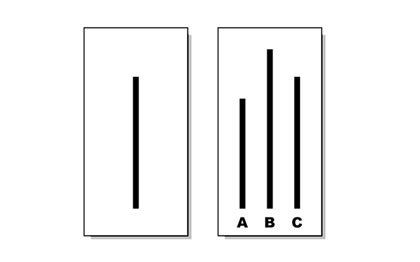
Have a look at the figure below. Compare the line on the left with the three lines on the right: A, B & C. Which of these three lines is the same length as the lonesome line on the left?


It’s obviously C. And yet in a classic psychology experiment conducted in the 1950s, 76% of people denied their own senses at least once, choosing either A or B. (6)

The results were fascinating, and not at all what you’d expect:

  • 50% of people gave the same wrong answer as the others on more than half of the trials.
  • Only 25% of participants refused to be swayed by the majority’s blatantly false judgement on all of the 12 trials.
  • 5% always conformed with the majority incorrect opinion (we all know people like that, right?!)
  • Over all the trials the average conformity rate was 33%.
Intrigued as to why participants had gone along with the majority. They were interviewed after the experiment. Their answers are probably very familiar to all of us:

  • All felt anxious, feared disapproval from others and became self-conscious.
  • Most explained they saw the lines differently to the group but then felt the group was correct.
  • Some said they went along with the group to avoid standing out, although they knew the group was wrong.
  • A small number of people actually said they saw the lines in the same way as the group.
Fitness Industry Example of conformity: I’ve often heard trainers who challenge the group-think being called “contrarians.” (I’m one of them) Interestingly enough, that’s actually a compliment to a non-conformist type, as the alternative to an individual of that mind set is to be a spineless conformist who acts like a shadow and changes their position every time someone else does.


7. Confirmation Bias


“Confirmation bias refers to a type of selective thinking whereby one tends to notice and to look for what confirms one’s beliefs, and to ignore, not look for, or undervalue the relevance of what contradicts one’s beliefs. For example, if you believe that during a full moon there is an increase in admissions to the emergency room where you work, you will take notice of admissions during a full moon, but be inattentive to the moon when admissions occur during other nights of the month. A tendency to do this over time unjustifiably strengthens your belief in the relationship between the full moon and accidents and other lunar effects.” (taken directly from this post at Skepdic.com)

Another great explanation for Confirmation Bias comes from Paul Ingram, who’s website I really enjoy reading – “Confirmation bias explains a lot about human nature. Most people know it best as “selective hearing” or “selective memory” — hearing and remembering only what you want to hear. Confirmation bias is a whole lot more: a dazzling array of devious and largely unconscious mental tactics and thinking glitches that lead people to confirm their beliefs and pet theories. We not only tend to ignore, deny and overlook anything that contradicts our point of view, but we also invariably notice, inflate and or even fabricate anything that supports it. Confirmation bias is one of the main reasons that The Truth is so slippery, and both amateurs and experts alike are prone to significant thinking errors. There are people who strive to eliminate confirmation bias from their thinking — the best scientists and journalists, for instance — but it’s really difficult. Everyone has confirmation bias: it’s just how minds (don’t) work!”

Lessons & Take away for Fitness Pros


  •  The above Psychological factors make us ALL a little full of BS  Yes, even YOU, ME, and your favorite leaders, experts, gurus, teachers, etc.
  • When coming to judgements and conclusions, first look inward at yourself and ask yourself WHY you came to this conclusion. Ask yourself what are the counter arguments? And, ask yourself HOW you came to this conclusion? Is it based on emotion, science, following a leader…
  • We all have strong beliefs in our training philosophies, which is great because it shows we’re passionate. But, we can’t fool ourselves into believing that we’ve put more thought into what we do than anyone else has, whether they agree with us or disagree.
  • We must embrace our differences, have the discipline to accept our own weaknesses, and understand that we are only half as smart as we’ve tricked ourselves into believing we are.
  • Understand that when we feel someone needs to “learn more” or “use better logic/ common sense”, they’re most likely thinking the exact same thing about us!
  • Accept that we’re probably not as special as our moms told us we were.
  • Understand that arguing about fitness training and trying to prove why your way is best is probably not the best use of your time and mental energy, unless you like to be frustrated and/or hear yourself talk.
  • Rarely will training subjects reach a generally accepted expert consensus. So, waiting for one will keep you lost and confused. To get answers, we must take things into our own hands by searching for our own truth, which involves using our own better-judgement, common sense and scientific knowledge.

You’ll never be Right!


We all must choose whether we’d rather work to be “effective” or try to be “right.” I choose to be effective! And, understanding the 7 Psychological realities I’ve listed above have empowered me with knowledge to be a more effective learner and teacher. I hope you’re able to use this knowledge to do the same for you!

References


1. Cross, P. (1977). “Not can but will college teachers be improved?”. New Directions for Higher Education 17: 1–15.

2. “It’s Academic.” 2000. Stanford GSB Reporter, April 24, pp.14–5. viaZuckerman, Ezra W.; John T. Jost (2001). “What Makes You Think You’re So Popular? Self Evaluation Maintenance and the Subjective Side of the “Friendship Paradox”". Social Psychology Quarterly (American Sociological Association) 64 (3): 207–223. doi:10.2307/3090112.JSTOR 3090112. Retrieved 2009-08-29.

3. Alicke, Mark D.; Olesya Govorun (2005). “The Better-Than-Average Effect”. In Mark D. Alicke, David A. Dunning, Joachim I. Krueger. The Self in Social Judgment. Studies in Self and Identity. Psychology Press. pp. 85–106. ISBN 9781841694184. OCLC 58054791.

4. Perloff, L.S.; B.K. Fetzer (1986). “Self-other judgments and perceived vulnerability to victimization”. Journal of Personality and Social Psychology(American Psychological Association) 50 (3): 502–510. doi:10.1037/0022-3514.50.3.502

5. Kruger, J. (1999). “Lake Woebegon be gone! The “below-average effect” and the egocentric nature of comparative ability judgments”. Journal of Personality and Social Psychology 77 (2): 221–232. doi:10.1037/0022-3514.77.2.221. PMID 10474208

6. A study of normative and informational social influences upon individual judgment.Deutsch, Morton; Gerard, Harold B. The Journal of Abnormal and Social Psychology, Vol 51(3), Nov 1955, 629-636.
Senin, 23 April 2012

Psychological manipulation.

Funnily enough, the above image of Matt Lucas' "Look into my eyes - not around my eyes" character from "Little Britain" was found on 'Look into my eyes': Supermarket robber who hypnotises checkout girls to get the cash is hunted by Italian police.

I've been reading Psychological manipulation on Wikipedia. Fascinating!

Knowledge is power. Don't be manipulated! Watch this video again...

Sabtu, 21 April 2012

Use 'em or lose 'em, Part 2.

I'm talking about your brain(s). Last year, I became depressed for several months for personal reasons that I won't go into. On December 8th 2011, something happened and the depression went away in an instant.

Unfortunately, several months of lying around doing very little had turned my brain to stodge. I tentatively resumed blogging in January 2012.

I find that the more I use my brain, the better it works, the more I can remember and the more I want to use it.

On the minus side, I find that I'm more impatient than I used to be. I'm now quite intolerant of, erm, f***wits on the roads and on the internets. Don't mention Giant Pandas!

Does resistance matter for hypertrophy?

This paper looks interesting..... The important thing seems to be training to failure.... not necessarily using a heavy load


Resistance exercise load does not determine training-mediated hypertrophic gains in young men

We have reported that the acute post-exercise increases in muscle protein synthesis rates, with differing nutritional support, are predictive of longer-term training-induced muscle hypertrophy. Here, we aimed to test whether the same was true with acute exercise-mediated changes in muscle protein synthesis. Eighteen men (21±1 yr, 22.6±2.1 kg∙m-2 means±SE) had their legs randomly assigned to two of three training conditions that differed in contraction intensity (% of maximal strength [1RM]) or contraction volume (1 or 3 sets of repetitions): 30%-3, 80%-1 and, 80%-3. Subjects trained each leg with their assigned regime for a period of 10wk, 3 times/wk. We made pre- and post-training measures of strength, muscle volume by magnetic resonance (MR) scans, as well as pre- and post-training biopsies of the vastus lateralis, and a single post-exercise (1h) biopsy following the first bout of exercise, to measure signalling proteins. Training-induced increases in MR-measured muscle volume were significant (P<0.01), with no difference between groups: 30%-3 = 6.8±1.8%, 80%-1 = 3.2±0.8%, and 80%-3= 7.2±1.9%, P=0.18. Isotonic maximal strength gains were not different between 80%-1 and 80%-3, but were greater than 30% -3 (P=0.04), whereas training-induced isometric strength gains were significant but not different between conditions (P =0.92). Biopsies taken 1h following the initial resistance exercise bout showed increased phosphorylation (P<0.05) of p70S6K only in the 80%-1 and 80%-3 conditions. There was no correlation between phosphorylation of any signalling protein and hypertrophy. In accordance with our previous acute measurements of muscle protein synthetic rates a lower load lifted to failure resulted in similar hypertrophy as a heavy load lifted to failure.

New Glute exercise

Bret Contreras - the Glute Guy - with a new approach to the Clam Shell......

How to read scientific research

Tim Huntley who sometimes writes for Robb Wolf passed on a link to a great piece has has done on how to read scientific research: it is written for a person who is new to science but would like to be able to understand the structure and primary concepts in a research article.

It is a great resource - thanks Tim!

Scientific Research 101

You might be a student with a homework assignment, someone who is searching for answers to a health question, or someone who is intrigued by a research study mentioned in the newspaper or on television.    Honestly there could be a thousand reasons why you want to lean how to read scientific research.

Independent of your age or education, you have the capability to understand scientific research studies.   I’m not suggesting that everyone should become a research scientist, but with a reasonable amount of effort, you can read, evaluate, and utilize the researcher’s work.  You simply need a roadmap to guide you along the way, and that is the purpose of this article.

The section on Bad Science is really useful!  For example:

Absolute vs. Relative Percentages
Suppose that there was a medical problem that caused 2 people  in 1,000,000 to have a stroke, and suppose there was a treatment that would reduce the problem to only 1 person per 1,000,000.  This would be an improvement of 0.0001% in an absolute sense or NO BIG DEAL.  However had I reported the results using relative percentages, I could have stated:  ”New medical treatment yields a 50% reduction in risk of stroke.”  This would obviously be quite misleading, but it is a common practice.


82 year old powerlifter

Something to aim for......


Great squats!  Thanks to Michael Allen Smith for posting this on Facebook.

Noakes on Fatigue - it is all in the brain....

A few weeks ago I pointed to the ideas of Samuele Marcora and his psycholbiological model of fatigue.  I also recently had an articule published in a UK hillwalking magazine which looked at his ideas.

I just noticed an review paper - the whole pdf is available - by the prominent Exercise Scientist Tim Noakes around these ideas:

Fatigue is a Brain-Derived Emotion that Regulates the Exercise Behavior to Ensure the Protection of Whole Body Homeostasis

The ideas are somewhat different from those of Marcora, who sees motivation as much more important, but the key is still the brain, not the muscles or cardiovascular system:

The model predicts that attempts to understand fatigue and to explain superior human athletic performance purely on the basis of the body's known physiological and metabolic responses to exercise must fail since subconscious and conscious mental decisions made by winners and losers, in both training and competition, are the ultimate determinants of both fatigue and athletic performance.
Worth reading.

Jumat, 20 April 2012

How eating sugar & starch can lower your insulin needs.

This is a bookmarking post. Jason Sandeman is a chef who has a couple of web-sites at Well Done Chef! and Jason Sandeman — Real Food For Your Life. He has Latent Autoimmune Diabetes of Adulthood (LADA), which has resulted in a total loss of his pancreatic beta cells which means that he has to take insulin.

Now, it's generally believed in low-carb circles (and by myself) that people with Type 1 Diabetes Mellitus (T1DM) should minimise their intake of sugary & starchy carbohydrates as these promote wild fluctuations in blood glucose. See The problem with Diabetes.

Jason wrote the following comment on Richard Nikoley's blog. The relevant part is as follows:-
"Even more weird – now that I have introduced the starches into the diet – I have actually got better control now. I thought my insulin needs would go up – but they haven’t. They’ve gone down."

To which I replied:-
"How about this for an explanation? You now have a well-controlled glucose input to your circulation via diet, which has suppressed the poorly-controlled glucose input to your circulation via hepatic glucose production."

Hepatic glucose production (HGP) is increased by Glucagon, Cortisol & Adrenaline/Epinephrine. These are secreted as blood glucose level falls below certain values in order to keep our brains alive. See
Blood Glucose, Insulin & Diabetes.

As keeping our brains alive is rather important (!), the mechanism is fairly crude in operation and blood glucose can overshoot in a positive direction, as a bit of glycation is less harmful than brain death. See
"Funny turns": What they aren't and what they might be. Hyperglycaemia requires insulin to lower blood glucose back to the normal range.

Therefore, eating some (but not too much) sugar & starch can result in lower blood glucose level and lower insulin secretion. Eating fibre/fiber (a carbohydrate) is also good for keeping blood glucose low, as only just mentioned in
Fiber and Insulin Sensitivity. Ain't the human body weird?

Fiber and Insulin Sensitivity.

Bluddy Americans. It's Fibre! But anyway....

Stabby the Raccoon posted the following study in a comment on CarbSane's blog. I thought that it was so interesting that I am linking to it here.

Fiber and Insulin Sensitivity.

This study has built-in cognitive dissonance.

The first Fig. suggests that cereal fibre is associated with a much lower RR for Type 2 Diabetes Mellitus (T2DM) and that fruit & veggie fibre aren't.

Schulze et al. 2007: Cereal Fiber RR = 0.6 - 0.7. Fruit Fiber RR = 0.9 - 1.05. Vegetable Fiber RR = 0.95 - 1.15 approx.

The next table suggests otherwise.

Andersson et al., 2007: Whole grain diet contained 112 g/d of whole grain, 18 g fiber. No effect of whole grains on insulin sensitivity.

Ebeling et al., 1988: 5 g/d granulated guar. No effect on insulin sensitivity.

Johnston et al., 2010: Resistant starch supplement -40g/d. Improved insulin sensitivity with resistant starch.

Landin et al., 1992: 30 g/d granulated guar, given in 3-10 g doses. Improved insulin sensitivity with guar diet.

Maki et al., 2011: High-resistant starch diet- 30 g/d, Low-resistant starch diet- 15 g/d. Improved insulin sensitivity with both resistant starch diets, but effect only reached statistical significance for men.

Nilsson et al., 2008: White bread enriched with barley fiber and 8g resistant starch, Barley kernel based bread. Improved glucose tolerance with resistant starch.

Pouteau et al., 2010: 28 g/d acetogenic fibers (acacia gum and pectin). No effect on insulin sensitivity.

Robertson et al., 2003: High-resistant starch diet- 60 g/d. Improved insulin sensitivity with resistant starch.

Weickert et al., 2006: Fiber-enriched with 31.2 g insoluble fiber. Improved insulin sensitivity with increased insoluble fiber.

In conclusion, the resistant starches found in high-amylose rices such as Basmati, refrigerated boiled rice & boiled potatoes, also rye & barley breads are beneficial in terms of reducing your RR for T2DM. Watch out, though. Too much dietary resistant starch can cause colic, flatulence & diarrhoea if your intestinal bacteria are knackered. You want fermentation to short-chain fatty acids to occur, not osmotic laxation! See Genetics of Food Intolerance.

Kamis, 19 April 2012

HP Deskjet F380 Ink Cartridge Error.

This is another techy post. I was printing a load of colour pictures when the printer suddenly stopped, displayed an "E" in the copy count window, lit the "cartridge" lamp next to the exclamation mark and opened a window on the lap-top screen with the words "Ink Cartridge Error" where the cartridges were displayed. Oh, dear!

I Googled the problem. Other people have had this problem. I use JET TEC H21 & H22 cartridges as they contain twice as much ink and are cheaper than HP H21 & H22 cartridges. They work really well, with no jet clogging when left unused in the printer for long periods of time. They give good ink coverage even when printing in Fast Draft mode.

Before throwing the F380 in the rubbish bin, I decided to replace both cartridges. I get my JET TEC H21 & H22 cartridges from inkraider.co.uk. The cartridges arrived the next day. Changing the H22 (colour) cartridge made no difference. Changing the H21 (black) cartridge cured the problem. The printer wasn't even using that cartridge when the fault occurred. I refitted the old H22 cartridge. It displayed as being full. I shall continue to use JET TEC cartridges, as this is the first time that I've had a problem with them in over a year of use.

It's interesting (to me) that a fault on one cartridge messed-up the operation of the other one even when the faulty cartridge was not being used. There's probably a short-circuit on an input/output line that's common to both cartridges.

So, don't throw the baby out with the bath water!

Rabu, 18 April 2012

Interview with OPT

If you have listened to Robb Wolf's podcasts you may have come across the name of James Fitzgerald / OPT and listened to the discussions of his performance and programming.

Spencer Morris has done a good interview with OPT:

There is a full transcript of the interview on his blog

Definitely worth watching / listening to:

Senin, 16 April 2012

stop old people from falling.....go barefoot?

My work is too busy at the moment for me to do much on this blog, but I am still keeping an eye on news and research.

This study popped up last week and I thought it had some interesting implications.

Altering gait by way of stimulation of the plantar surface of the foot: the immediate effect of wearing textured insoles in older fallers

Conclusions - Stimulating the plantar surface of the foot by way of wearing this type of textured insole causes an immediate effect - in this case a slower, more cautious gait in older fallers. Further work is required to determine how textured insoles can be used to improve gait in older fallers.

The whole study is there for you to look through.

Anyway, what this made me think of was the value of being barefoot.  So much information comes from the feet, from the sole.  While shod, all that information is blunted.  Barefoot there is so much more stimulation and data that can be processed by the brain to feed into the proprioceptive system.

Textured insoles are just a "stepping stone" to being barefoot.  If they can help to prevent falls, maybe being barefoot....on rough rich surfaces...could do even more

Minggu, 15 April 2012

Foxy versus Shiny.

I've been using Mozilla Firefox for about six years. It's a very good browser, but it occasionally annoys me by acting like a Giant Panda i.e. it becomes very sluggish. It's possible to speed-up Firefox by going to about:memory and clicking on the "Minimise memory usage" button, but occasionally, I have to shut down Firefox, wait (sometimes for quite a long time) for it to disappear from memory, then restart.
I therefore decided to have an affair with Google Chrome.

First impressions were good. Chrome installed quickly and it imported all of my Firefox bookmarks correctly, although it didn't import any website user-names & passwords (probably because they are protected).

Chrome has an extensive range of add-ons available. I was able to install Adblock Element Hiding Helper (which had all of the functionality of Adblock Plus, plus some extra features), Script No and Flag. With all of these installed, Chrome loaded pages very quickly.

Then cracks started to appear in the relationship.

Chrome has a grey bar at the top of the page which obscures things on the page. Double-clicking on it makes it disappear. Reloading the page makes it reappear. Using Adblock Element Hiding Helper, I could hide the grey bar (Alt+B, click on grey bar, Enter) on any particular site, but it occasionally reappears, requiring re-hiding.

Right-clicking on a link and selecting "Open link in new tab" opens a new tab but doesn't display it, requiring the user to click on the new tab. Firefox used to do this, but has worked correctly for a long time.

Watching videos on ITVPlayer, I noticed that the resolution appeared much lower than when played on Firefox. On Firefox, there's pixel interpolation which produces a much higher apparent resolution.

And the killer blow:-

When I created a new blog post, I couldn't set hyperlink text colour and the Html editor revealed a large number of spurious div & span tags.

That's it, Google Chrome. You're dumped!

EDIT: P.S. Firefox has been running faster.

Jumat, 13 April 2012

Dementia in the news again.

While out buying eggs, I noticed the following headline on the front page of the Daily Express:-

Time to take a peek at Google News.

Oh, dear!

I took another look at The Cochrane Library.

A search for "Dementia NOT "Down Syndrome" NOT Vascular NOT Aids NOT carer and Reviews" produced only 31 results, compared to 44 back in the day when I wrote Dementia: A review of the evidence.

Hmmm.

My own research led me to write Look after your brain.

Recently, I found Vitamin D Stimulates Amyloid Clearance in Alzheimer's, which also suggests that curcumin (found in Turmeric) is important in the fight against dementia.

Rabu, 11 April 2012

The Aging Brain

This is interesting
This is How Your Brain Ages
Presented by: Term Life Insurance Resource

BlackBerry 9700 Headset Problem.

Blatant excuse to post the following video:-

But seriously, folks...

Nick, who cooks my Full English breakfasts in Henley-on-Thames, gave me his wife's BlackBerry Bold 9700 to look at, as it had an odd fault. With the headset plugged in, it worked fine. With the headset unplugged, the phone oscillated between using the internal loudspeaker and the headset socket about once a second, rendering the phone unusable.

After many hours of unsuccessful tinkering, I decided to take a look on Google to see if anybody else had successfully cracked the problem. I saw THIS. It appears to be a common problem with BlackBerrys, with lots of spam sites offering unlock codes to "fix" it.

Having upgraded the phone software from V5 to V6, the fault was still present. Therefore, it's not a software problem. Therefore, unlock codes won't fix it!

It's a hardware problem. It may be a design or a production problem, but the pull-up on the headset socket is too weak/has failed, resulting in the voltage on the headset present/not present control line falling towards "present" when the headset is not present. This may also be caused by moisture in the headset socket.

As the above control line interrupts the processor (as an instant response is required on plugging/unplugging the headset), there is major disruption to the phone's operation.

A fault like this is easily fixable by a reputable mobile phone repair shop. A resistor value change or solder joint rework is all that's required.

EDIT: As of 11th April 2012, Blogger is no longer compatible with the default BlackBerry browser. Basically, my BlackBerry is not working!

I am now using the Opera Mini browser. If I display emails
on the BlackBerry in plain text, I can open links using Opera Mini, which works O.K. with Blogger.

Senin, 09 April 2012

Reasons to get off low-fat diets...

Part 1. Increased risk of Coronary Heart Disease due to a lack of gamma-tocopherol in the diet. See Antioxidant state and mortality from coronary heart disease in Lithuanian and Swedish men: concomitant cross sectional study of men aged 50.

See 300 foods highest in Gamma Tocopherol per 100g serving. Low-fat dieters are discouraged from eating foods high in fat. There is no gamma-tocopherol in most Vitamin E supplements. There is gamma-tocopherol in nuts & seeds. Only use Vitamin E supplements that contain mixed tocopherols.

Ditto for beta-carotene, found in coloured veggies and poorly absorbed without dietary fat.
Ditto for lycopene, found in tomatoes and poorly absorbed without dietary fat.


Part 2. Increased risk of tooth decay due to a lack of Vitamin K2. If you listen to Denise Minger's talk, starting at 8 minutes in, she discusses her poor oral health at a young age brought on by a lack of Vitamin K2. Richard Nikoley also discusses the effect of Vitamin K2 on his oral health.

See Vitamin K.


Part 3. Increased risk of gallbladder disease when losing weight. This applies to people (particularly Fair Fat Females in their Forties) who are losing weight rapidly, as this concentrates cholesterol in their bile. I find it rather odd that some people are obsessed with doing exercise, but they fail to exercise their gallbladders by eating at least 5 grams of fat in a meal.

See The Protein-Sparing Modified Fast (PSMF).

Flamingo on the bus


I actually do this on the bus......

From nano workout....

The Flamingo is a balance exercise you can do if you find yourself standing on an unstable platform such as on a train, bus or in an elevator.

It couldn’t be more simple to do. Just lift one leg slightly and try to keep your balance without holding on to something. Public transportation are rarely known for providing a smooth ride so you are in for a challenge, but if you for some reason think it’s too easy then try to close your eyes while still standing on one leg.

You will get a great balance exercise and also strengthen the muscles on your lower legs.

more bike insanity


Chair Traverse

Superb  (thanks to Keith Lee from Twitter)

DNA and Christmas Tree Lights

Another video from Nessa Carey, explaining the structure of DNA.  As I said in the last post she explains things really well.

The Epigenetics Revolution: DNA is a script not a template

Friday night we went along to another lecture at the Edinburgh Science Festival.  This one was on one of my trinity of sexy subject (mitochondria, the microbiome and epigenetics).

Nessa Carey was the lecturer and she was talking about epigenetics.  It was a really good talk.  What made it very helpful was the way in which she used good illustrations to explain the complexities of epigenetics.  

She talked about how DNA is not a template to make lots of identical clones, but a script:  her example was Romeo and Juliet....the words can be the same but what comes out at the end on stage or screen can be totally different.


Another one she had relating to disease as much as anything was the idea of a bicycle.  The bike can be fine, everything functioning and ready to go.  However, if it is locked to a fence it will not be going anywhere.  Nothing wrong with the bike, but until it is released then it will not function.  Similarly your DNA can be fine with the code for all sorts of health, but if some environmental factors ar limiting it then the potential will never be expressed.

Some of her historical stories were fascinating too, like the Dutch Hunger Winter and its impact on the health of children and grandchildren of those who suffered at that time.

Her other useful example was a set of diagrams using sweets / candy to explain the structure of DNA....there is a pdf on her site which presents her model
and of course the video!

I might buy her book when I get a bit more time to read.

My question for her was how to unlock my bike to reach my full potential.....

Minggu, 08 April 2012

Add some sprints....

This one looked interesting.

Adding a few sprints to your basic steady state cardio added fun, did not feel harder and increaed energy expenditure...

Adding sprints to continuous exercise at the intensity that maximises fat oxidation: Implications for acute energy balance and enjoyment.

The objective was to examine the effect of adding sprints to continuous exercise at the intensity that maximises fat oxidation (Fat(max)) on energy expenditure, substrate oxidation, enjoyment and post-exercise energy intake in boys. Nine overweight and nine normal weight boys (8-12 years) attended the laboratory on three mornings. First, body anthropometrics, peak aerobic capacity and Fat(max) were assessed. On the remaining two sessions, resting metabolic rate was determined before participants completed 30 min of either continuous cycling at Fat(max) (MOD) or sprint interval exercise consisting of continuous cycling at Fat(max) interspersed with four-second maximal sprints every two minutes (SI). Energy expenditure and substrate oxidation were measured during exercise and for 30 min post-exercise, while participants completed a modified Physical Activity Enjoyment Scale (PACES). This was followed by a buffet-like breakfast to measure post-exercise energy intake. Fat oxidation rate was similar between groups and protocols (P>0.05). Both groups expended more energy with SI compared to MOD, resulting from increased carbohydrate oxidation (P<0.05), which was not compensated by increased energy intake. Participants indicated that they preferred SI more than MOD, although there was no significant difference in PACES score between the protocols (P>0.05). In summary, the addition of short sprints to continuous exercise at Fat(max) increased energy expenditure without compromising fat oxidation or stimulating increased post-exercise energy intake. The boys preferred SI and did not perceive it to be any harder than MOD, indicating that sprint interval exercise should be considered in exercise prescription for this population.

Sabtu, 07 April 2012

The Capacitive Bottom-fed Fat Monopole.

Alternative title:- Serendipity rules, O.K.

This post is not about an obese Polish person who has a huge appetite, lives alone and has to be fed anally. I know a hilarious suppository joke, but it's not really suitable for this blog.

Having stayed up all night reading nearly 800 comments on Jack Kruse: Neurosurgeon. Leptin Reset and Cold Thermogenesis. Controversy, I noticed Sean's comment about Antennas.

I designed antennas for 225MHz to 400MHz portable man-pack radios (also a 1GHz to 3GHz Ultra Wide Band monopole antenna). There were two existing man-pack antennas, affectionately known as "The Bird-cage" and "The Egg-whisk". Electrically they worked well, but they would both catch in branches when the radio was used in woods.

My mission (should I choose to accept it, which I did) was to design an antenna that had a good impedance match over 225MHz to 400MHz, a good gain and couldn't get caught in branches.

The reason why the original antennas were shaped like bird-cages and egg-whisks was because barrels and inverse cones give a better impedance match than a piece of wire. Don't ask me why. The answer is extremely complicated and even I don't understand it!

The antenna had to be a bottom-fed monopole (an antenna which is designed to work with a ground-plane) with a connector at the bottom which plugged into the radio's RF connector. The RF system impedance was the standard 50 ohms.

As fat cylinders give a better impedance match than thin cylinders (a wire being an extreme case of a thin cylinder), I went for the fattest cylinder that would be acceptable on a man-pack radio. I designed an impedance-matching transformer using one of THESE made out of THIS. I connected the transformer to the end of the fat cylinder and examined the impedance using a 8753C Network Analyzer (or even older model).

During some faffing-about, a wire snapped and I was amazed to see that the match to 50 ohms improved. This led to other improvements being made, resulting in the Capacitive Bottom-fed Fat Monopole. It was rugged, it couldn't get caught in branches and it had a high gain. You could even bash somebody over the head with it without breaking it. It worked well on field trials. There were two versions - a short one for covert use which had a lower gain and a longer one for normal use which had a higher gain.

I hope you found that interesting. It's nice (for me) to blog about stuff that I have qualifications in!

Jumat, 06 April 2012

Kamis, 05 April 2012

Hip Flexor Stretch

Someone (the nano workout crew) has been watching Kelly S 


The original

Pain - a privilege

I was listening to one of John Kynaston 's West Highland Way race podcasts last night. The WHW is a race over 95 miles in the West Highlands of Scotland. One of the speakers was talking about carrying on when it gets tough.

She said something like"pain is a privilege for the living. ". Take encouragement from it. It reminds you that you are alive and lucky enough and fit enough to be doing this. She had come back to race after a brain injury and for her sore feet were a joy!

Look for the positives in your struggles.

Rabu, 04 April 2012

Robb Wolf's Paleo Budget Shopping Guide

The Paleo Diet Budget Shopping Guide

If just received a review copy of Robb Wolf's new ebook - a Paleo Budget Shopping Guide - and have been quickly skimming through it.  I like it.

Target

The book is aimed clearly at addressing one key complaint - "I can't afford it!".   People may be convinced that a paleo diet is wise and could solve  their health and performance issues, but it just seems like it would be beyond their wallet.  It is very much a book for this century when many have forgotten how to buy and cook real food.


You can afford it!

Robb sees this very much as an excuse - often it is about making time to shop and cook - and explains how you can improve your diet to adopt a Paleo template without going bankrupt. 

Cook, Plan, Save, Shop and Prepare

Across the ebook's 6 chapters, Robb deals with these key principles.

    The Paleo Diet Budget Shopping Guide
  • Learn to cook - there are preparation methods that make things cheap and easy, like a pressure cooker or slow cooker.
  • Plan your meals - a bit of planning will stop waste and allow you to pull together the maximum meal from minimum resources.
  • Money Saving tricks - Robb outlines a few ideas on saving money on your shopping - buying in bulk for example and getting ingredients not products so that you are not paying someone else to do the preparation.
  • Budget Shopping Priorities - the tweaks....if you can afford organic and grass-fed , what should you go for?
  • Kitchen tricks - final ideas and hacks for saving time and money in the kitchen...freezing and cooking in bulk for example.


Not just for Paleo 

 Yes this is aimed at paleo adopters.....but I am convinced that there are lessons here that would help any of us...whatever your diet.  If you want to eat real food but are worried about affording it then this book will point you in the right direction.

The Voice

If you listen to Robb's podcasts you will recognise his voice in the writing - it is playful, witty and accessible.  Highly recommended!

Click on the images above or below to buy your copy.
The Paleo Diet Budget Shopping Guide

Powerlifting documentary

If you have a couple of hours, this documentary is worth watching.


hat tip to Marc

Another excuse to drink red wine

What excuse do I need?

A compound found in red wine, grapes and other fruits, and similar in structure to resveratrol, is able to block cellular processes that allow fat cells to develop, opening a door to a potential method to control obesity, according to a Purdue University study.

It is an interesting mechanism here:

Kim found that piceatannol binds to insulin receptors of immature fat cells in the first stage of adipogenesis, blocking insulin's ability to control cell cycles and activate genes that carry out further stages of fat cell formation. Piceatannol essentially blocks the pathways necessary for immature fat cells to mature and grow.

The Limits to Performance

I went to an event last night at the Edinburgh Science Festival.  It was a fascinating lecture by 4 of the UK's (world's?) top exercise scientists.

The lecture was called How far, how fast how high?
What are the genetic, physiological, biochemical and psychological limits to the human body? Former UK Athletics Performance Director, Professor Dave Collins, joins sports scientists Dr Yannis Pitsiladis and Professor Andy Jones, and nutritionist Professor Ron Maughan to discuss the physiologic, genetic, psychosocial and economic determinants of success, and the limits to performance. Citius, Altius, Fortius is the Olympic motto, but how far, how fast and how high can we actually go?

All of the talks were excellent:

  • Dave Colins spoke about the psychology of winning - all things being equal, elite athletes are those who believe that they are the best.   He gave a fascinating report of a study he had done on powerlifters.  He told them they were getting steroids when in fact they were on a placebo.  They all got significantly stronger.  He really stressed that believing that you are on the right training system and that you will succeed is vitally important.  Yes talent and ability are fundamental but the winners are those that believe in themselves and their approach.  I've been thinking a lot about this area recently and the whole idea of the placebo.  Really interesting and under-appreciated.  
  • Andy Jones  talked about the physiology of champions.  He had worked with Paula Radcliffe and spoke about the unique nature of her body.  She is basically in the very top percentiles of the distribution.  Her VO2 max, velocity at VO2 max etc are all off te charts.  In testing her he was able to predict her times and indeed her world record times at various distances.  This stressed the importance of talent, of ability....but he also mentioned that a key thing with Paula was her ability to hurt herself, to push herself.  Again it is mental.
  • Yannis Pitsiladis talked about geneticsHe had looked at the DNA of the top runners in the world, all Africans.  Sprinters tend to be West African and middle / long distance runners tend to be East African (Ethiopian/Kenyan etc).  He had looked at certain candidate genes and also done GWAS but had  not identified any real genes that were responsible.  It was all pointing towards epigenetics,  environmental factors that activate the genes.
  • Ron Maughan talked about nutrition, but he key focus was that nutrition is really bottom of the pile - talent, trainability, training, psychology, social support etc are all much more important.  He also stressed that much of the key science is actually very old - he referred to papers from 1919 by Bainbridge.
It has long been recognized that the main seat of fatigue after muscular exercise is in the central nervous system. Mosso long ago stated that “nervous fatigue is the preponderating phenomenon and muscular fatigue is also at the bottom of the nervous system”. There appear, however, to be two types of fatigue, one arising entirely within the central nervous system, the other in which fatigue of the muscles themselves is superadded to that of the nervous system.
  •  This idea really reminded me of the ideas of Marcora
Anyway, a really interesting evening.

Negativity is NOT an option!

Oh, wait.

I received a comment on another blog post mentioning Jeffrey M Friedman's commentary Modern science versus the stigma of obesity. I took offence to the following passage:-

"This simplistic notion is at odds with substantial scientific evidence illuminating a precise and powerful biologic system that maintains body weight within a relatively narrow range."

To say that I disagree with the above passage is an understatement of epic proportions. If this is the case, how can Extreme weight loss without surgery happen? This woman went from 265kg (583lb) to 97kg (213lb).

With the right diet, huge amounts of weight & body-fat can be lost and kept off. Lyle McDonald's Rapid Fat Loss solution is a PSMF (Protein-Sparing Modified Fast) that can produce huge weight & body-fat loss. See The Protein-Sparing Modified Fast (PSMF).

Up with this negativity I will not put!

Senin, 02 April 2012

Survival of the fittest....and that paleo guy

Back last summer sometime I was contacted by the editor of an on-line magazine Interesting Times who asked me to write something for him.  At the time I was busy with work and couldn't put the time into writing.  Plus I didn't think I had what he was looking for.....but I knew a man who did!  I pointed him towards Jamie Scott - New Zealand's That Paleo Guy - and sue enough Jamie wrote a superb piece detailing how his training, diet and lifestyle had enabled him to survive the Christchurch earthquakes of last year.

I'd just about forgotten about the piece but I got an email today with a link to download the magazine.

I have not read the rest of it, but Jamie's piece  - Survival of the Fittest …and most skillful? - is brilliant.  Check it out!

Minggu, 01 April 2012

News: Vegetarian diet is bad for the thyroid

I spotted this poster outside a newsagent today and it prompted me to buy the paper:


The story is here and basically is telling us that thyroid problems are increasing because:

  • More people are cutting RED meat from their diet
  • People are eating more soy
 The latest official figures show that NHS Scotland spent £8 million treating thyroid conditions in 2011 compared with just £2.2 million in 2001. Over the same decade, the number of prescriptions for thyroid problems soared from 1.2 million to 2.2 million.

Experts believe a lack of iron from reduced red meat consumption and large amounts of soya in some vegetarian meals has contributed to the increase of more than 300 per cent in Scotland’s thyroid drug bill.
The poster really made me stop - it is so rare to see vegetarian diets identified as UNhealthy.